
Ronald Koeman Jr. Questions Controversial Penalty in Telstar’s 4-3 Defeat to Feyenoord
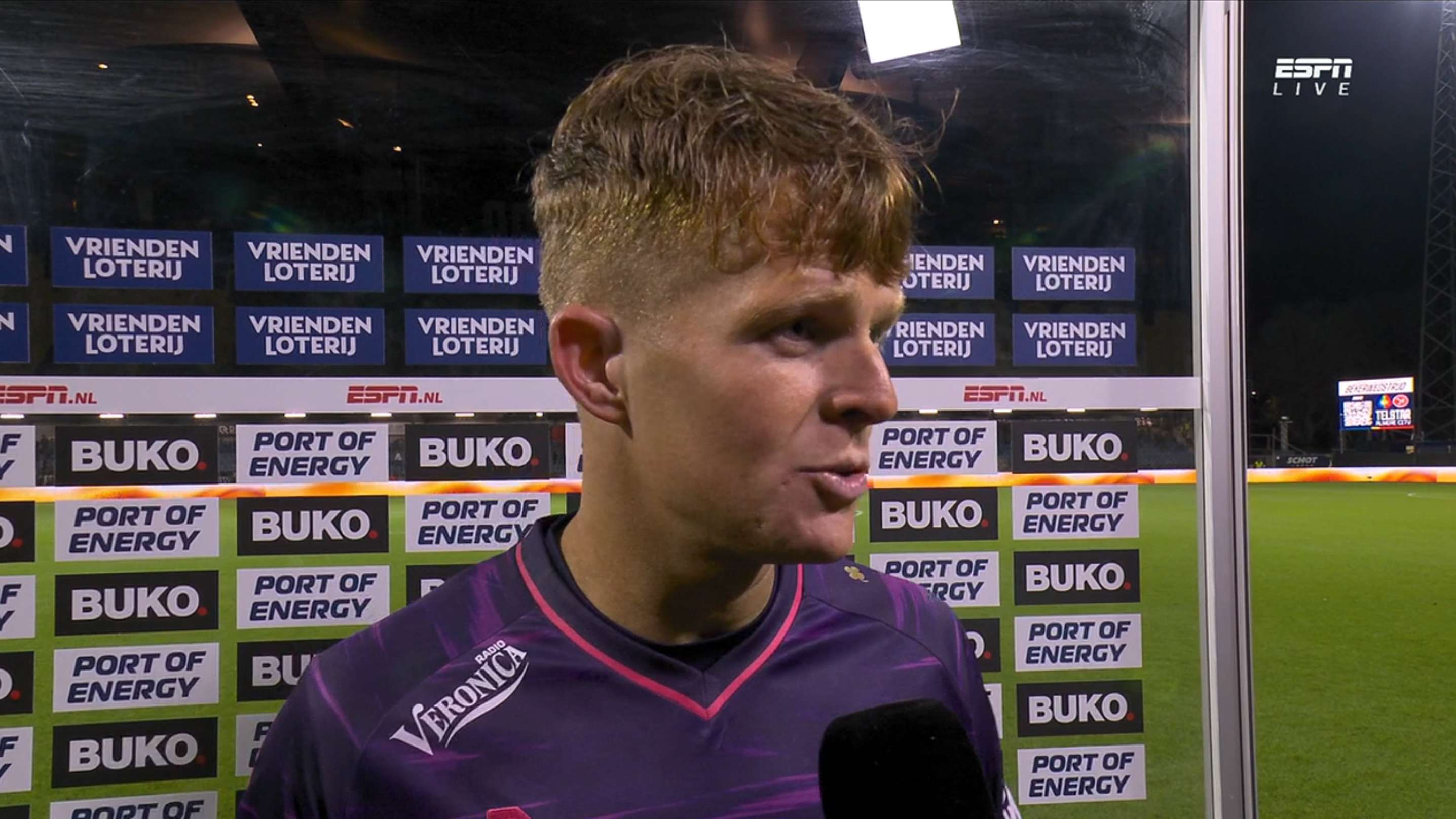
Telstar goalkeeper Ronald Koeman Jr. was left frustrated after his side’s dramatic 4-3 defeat to Feyenoord, directing sharp criticism at referee Jeroen Manschot over a second-half penalty that helped the visitors extend their lead. Speaking to ESPN immediately after the match, Koeman argued that the decision against Telstar defender Abdelnour Soualhia was wrong and could have changed the course of the contest.
The incident came shortly after the break, with Feyenoord leading in a lively Eredivisie encounter. Manschot awarded the Rotterdam side a penalty for an alleged handball by Soualhia. Video assistant referee (VAR) officials reviewed the footage at length, but the on-field decision stood. Sem Steijn then converted from the spot to make it 4-2, giving Feyenoord a two-goal cushion at a crucial point in the game.
Koeman Jr. disputes the handball decision
Watching a replay of the incident during his ESPN interview, Koeman Jr. struggled to understand how the penalty had been given. He argued that the ball appeared to strike Soualhia’s head before making contact with the defender’s arm, a sequence he believes should have ruled out a handball offence.
“If the ball hits him, it hits his head first,” Koeman said, visibly exasperated. He also referred to guidance he said he had heard from refereeing chief Richard van Meenen, suggesting that contact with a player’s hand after the ball first strikes their own body should not automatically be penalised.
The goalkeeper’s frustration was not limited to the decision itself. Koeman Jr. also recalled a previous disagreement involving Manschot during last season’s KNVB Cup semi-final. He initially accused the referee of having cost Telstar on that occasion, then softened his wording, acknowledging that his team may also have been unlucky.
“It’s Jeroen Manschot again,” Koeman said, before adding that Telstar had perhaps simply suffered bad fortune. His comments reflected the emotion of a match in which the home side repeatedly had to recover from setbacks while facing one of the league’s strongest teams.
Penalty proved pivotal in the match prediction
For Telstar, the timing of the penalty mattered as much as the decision. With the score still closer, the home side could have continued to build pressure and search for an equaliser. Instead, Steijn’s successful spot-kick restored a two-goal gap and forced Telstar to take further risks in pursuit of a comeback.
Koeman Jr. suggested that the match might have developed differently had the penalty not been awarded. A 3-2 scoreline, he indicated, could have left the contest wide open. In football, momentum can shift quickly, particularly when a team is playing at home and has already shown it can respond to adversity. The penalty therefore became a major talking point not only because of the VAR review, but because of its potential influence on the game’s outcome.
Koeman also described a brief exchange with Manschot after the incident. According to the goalkeeper, the referee told him that he ultimately had to make his own decision. Koeman interpreted that response as a possible sign that officials are being encouraged to rely more heavily on their on-field judgement, even when VAR is available.
The Telstar goalkeeper said he would have preferred play to continue, allowing VAR to intervene if the footage clearly showed an offence. That view highlights a familiar debate in modern football: whether video reviews should correct obvious mistakes while preserving the pace and authority of the referee’s original decision.
Steijn converts as Feyenoord hold on
Koeman Jr. did not hide his disappointment at conceding from the penalty, but he gave credit to Steijn for the finish. The goalkeeper admitted he had hoped to make the save, yet said the Feyenoord player struck the ball well. The goal put the visitors in a strong position, although Telstar continued to fight and kept the match competitive until the final stages.
The result was a 4-3 defeat for Telstar, a scoreline that reflected both Feyenoord’s attacking quality and the home side’s willingness to play on the front foot. Telstar’s approach involves pressing high and trying to disrupt opponents early. That strategy can create chances and energise a team, but it can also leave space behind the defensive line—an opening that a technically strong side such as Feyenoord can exploit.
Koeman Jr. acknowledged that risk, describing the high press as part of Telstar’s identity. Against elite opposition, the approach can make for an open and entertaining match, but it demands sharp organisation and concentration. Feyenoord’s ability to punish mistakes helped explain why the visitors scored four times, even as Telstar found ways to respond.
Telstar take confidence from their comeback attempts
Despite the loss and his anger over the penalty, Koeman Jr. was keen to focus on the positives. He praised his teammates for continuing to play their football after setbacks and for repeatedly trying to get back into the contest. Rather than allowing the scoreline to break their resolve, Telstar kept pressing and attacking.
That resilience could be important as the team prepares for its next fixture. A defeat to a leading opponent is difficult to accept, especially when a disputed decision becomes central to the post-match discussion, but Telstar can still draw encouragement from its attacking intent and willingness to compete. The challenge now is to turn that performance into points by combining the same energy with greater defensive control.
Koeman Jr. said he wanted the team to carry its effort into the following week and expressed confidence in the group. His reaction captured both the frustration of a narrow defeat and the belief that Telstar can build on what it showed against Feyenoord.
For supporters assessing the match, the penalty will remain a key part of the post-game prediction and analysis. Yet the broader story is also about Telstar’s character: the side kept pushing against a high-quality opponent and made Feyenoord work for the result. Whether the controversial call was decisive is open to debate, but Telstar’s response offers a reason for optimism heading into its next football challenge.