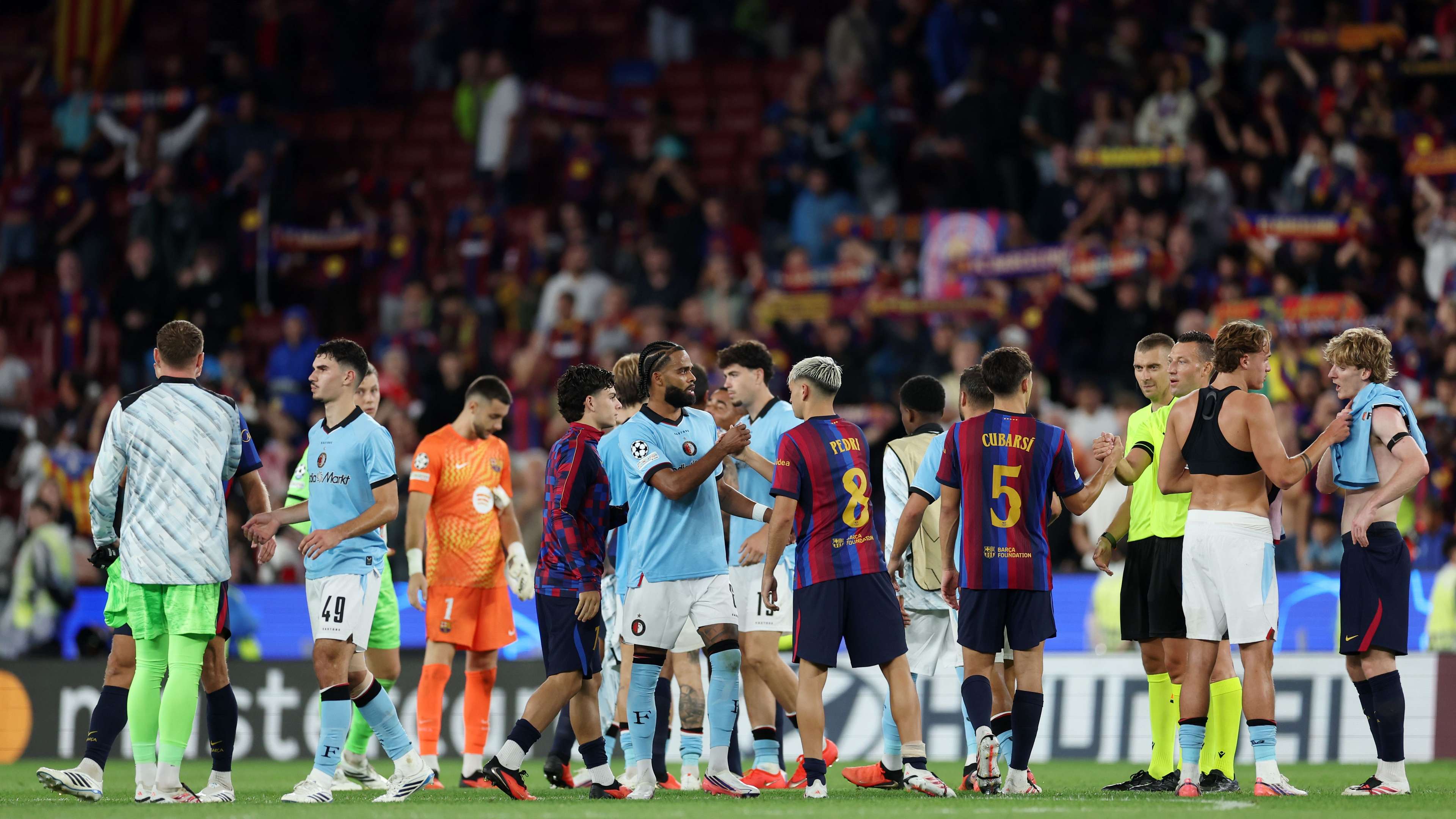

UEFA Imposes Heavy Penalties on Feyenoord Following Fan Misconduct at Camp Nou
In a decisive move aimed at maintaining the integrity of European football, UEFA has levied significant financial penalties and sanctions against Dutch club Feyenoord following unruly and unacceptable behavior by their supporters during the recent Champions League clash against Barcelona at the iconic Camp Nou stadium. These disciplinary measures underscore UEFA’s unwavering stance against racism, vandalism, and disruptive conduct in football, reinforcing the sport’s commitment to promoting respect, safety, and fair play across all competitions.
Details of the Incident and UEFA’s Response
The match in question, held at Barcelona’s renowned home ground, turned controversial due to a series of misconduct incidents involving Feyenoord fans. UEFA’s investigation revealed that supporters of the Dutch side engaged in racist behavior, threw objects onto the pitch, and participated in disruptive chanting that marred the sporting spectacle. Additionally, damage inflicted on the away team’s designated stands compounded the severity of the incident, prompting UEFA to act swiftly and decisively.
According to UEFA’s official statement, the penalties imposed on Feyenoord total €74,375. The breakdown of fines reflects the gravity of each misconduct:
- €25,000 fine for racist and discriminatory behavior exhibited by supporters, a violation that UEFA strictly condemns in its ongoing campaign against discrimination in football.
- €26,375 fine for the throwing of objects onto the pitch, which jeopardizes player safety and disrupts the flow of the game.
- €10,000 fine for transmitting inappropriate messages during the match, an act that undermines the decorum expected during UEFA competitions.
- €13,000 fine related to vandalism and damage caused to the away team’s stands, which not only results in financial costs but also tarnishes the reputation of the club’s supporters.
Additional Sanctions and Future Implications
Beyond financial penalties, UEFA has instituted additional sanctions to discourage future misconduct. Feyenoord’s ticket allocation for their next away fixture will be reduced by 25%, decreasing from 5% to 3.75% of the host stadium’s capacity. This reduction aims to limit the potential for large gatherings of unruly fans and serves as a reminder of the club’s responsibility to ensure supporter behavior aligns with UEFA’s standards.
Importantly, UEFA has suspended the enforcement of this reduced ticket allocation for a probationary period of two years, starting from the date of the decision. This probationary period offers Feyenoord an opportunity to demonstrate their commitment to fan discipline and to implement measures that promote a safer and more respectful environment at future matches.
UEFA’s Broader Campaign Against Fan Misconduct in Football
The penalties imposed on Feyenoord are part of UEFA’s comprehensive strategy to combat misconduct and uphold the core values of football. Incidents like racist abuse and vandalism not only tarnish the reputation of clubs and their supporters but also pose serious safety concerns for players, officials, and fans alike. UEFA’s commitment to zero tolerance reflects its dedication to ensuring that football remains a sport of unity, respect, and integrity.
This case also highlights the importance of proactive measures by clubs to educate and enforce supporter conduct, especially in high-profile matches that attract global viewership. Many clubs now invest in supporter engagement programs, increased stadium surveillance, and stricter entry controls to prevent such incidents from recurring.
Impact on Feyenoord and the Road Ahead
Feyenoord, a club with a rich footballing history, now faces a critical juncture. The fines and sanctions serve as a stark reminder that fan behavior can significantly impact a club’s reputation and future prospects in European competitions. The club’s management has been urged to work closely with supporter groups to foster a culture of respect and sportsmanship.
Looking ahead, Feyenoord fans and officials will need to demonstrate their commitment to positive behavior, especially as the club prepares for upcoming UEFA Youth League matches and other fixtures. The club’s next steps include engaging with supporters to reinforce messages of respect and to implement stricter measures to prevent misconduct in future matches.
Expert Insights and the Future of Football Prediction
Football analysts and fans alike are increasingly emphasizing the importance of prediction models that take into account not only team form and tactical setups but also the environment surrounding the matches, including fan behavior and stadium safety. As incidents of misconduct become more scrutinized, predictive analytics in football are evolving to incorporate social and behavioral factors, providing more comprehensive predictions for match outcomes and potential disruptions.
In the context of upcoming fixtures, such as the UEFA Youth League matches featuring Galatasaray U19 against Barcelona U19 and Feyenoord U19 facing Como U19, the focus is not solely on the on-field performance but also on ensuring that the environment remains safe and respectful. Accurate predictions now consider both team capabilities and the potential influence of supporter conduct, making football betting and analysis more sophisticated and responsible.
Conclusion: Upholding the Spirit of the Game
The disciplinary actions taken against Feyenoord exemplify UEFA’s unwavering stance against misconduct and its dedication to preserving the true spirit of football. While the penalties impose financial and logistical challenges, they also serve as catalysts for clubs worldwide to reinforce their commitment to respect, safety, and fair play.
As the football community continues to evolve, fostering a culture of positive supporter behavior remains paramount. Fans, clubs, and governing bodies must work together to ensure that the beautiful game remains a source of joy, unity, and inspiration for generations to come. The focus on prediction models that include behavioral factors further underscores the sport’s progression into a more intelligent, inclusive, and responsible era.