
Argentina President Accuses Brazil, Mexico, and US Democratic Party of Funding Anti-Argentina Campaign
Argentine President Javier Milei has sparked a major crisis by alleging that Brazil, Mexico, and the US Democratic Party are funding an “anti-Argentina campaign” related to the 2026 World Cup. The controversy reignited when Milei accused foreign parties of investing in an operation aimed at damaging Argentina’s image and its national football team.
Unsubstantiated Claims
In an interview with Radio Mitre, President Milei made these claims without providing any concrete evidence. He even suggested that 25% of the funding for the alleged campaign came from the Brazilian government. The French website “Foot Mercato” reported on Milei’s accusations, which have caused a stir in the political landscape of South America.
Additionally, President Milei criticized progressive thinkers whom he believes are attempting to suppress his political ideas. These remarks come at a time when tensions between Buenos Aires and Brasilia are already high, with President Milei engaging in verbal spats with Brazilian President Luiz Inacio Lula da Silva and other prominent Brazilian figures.
Political Confrontation
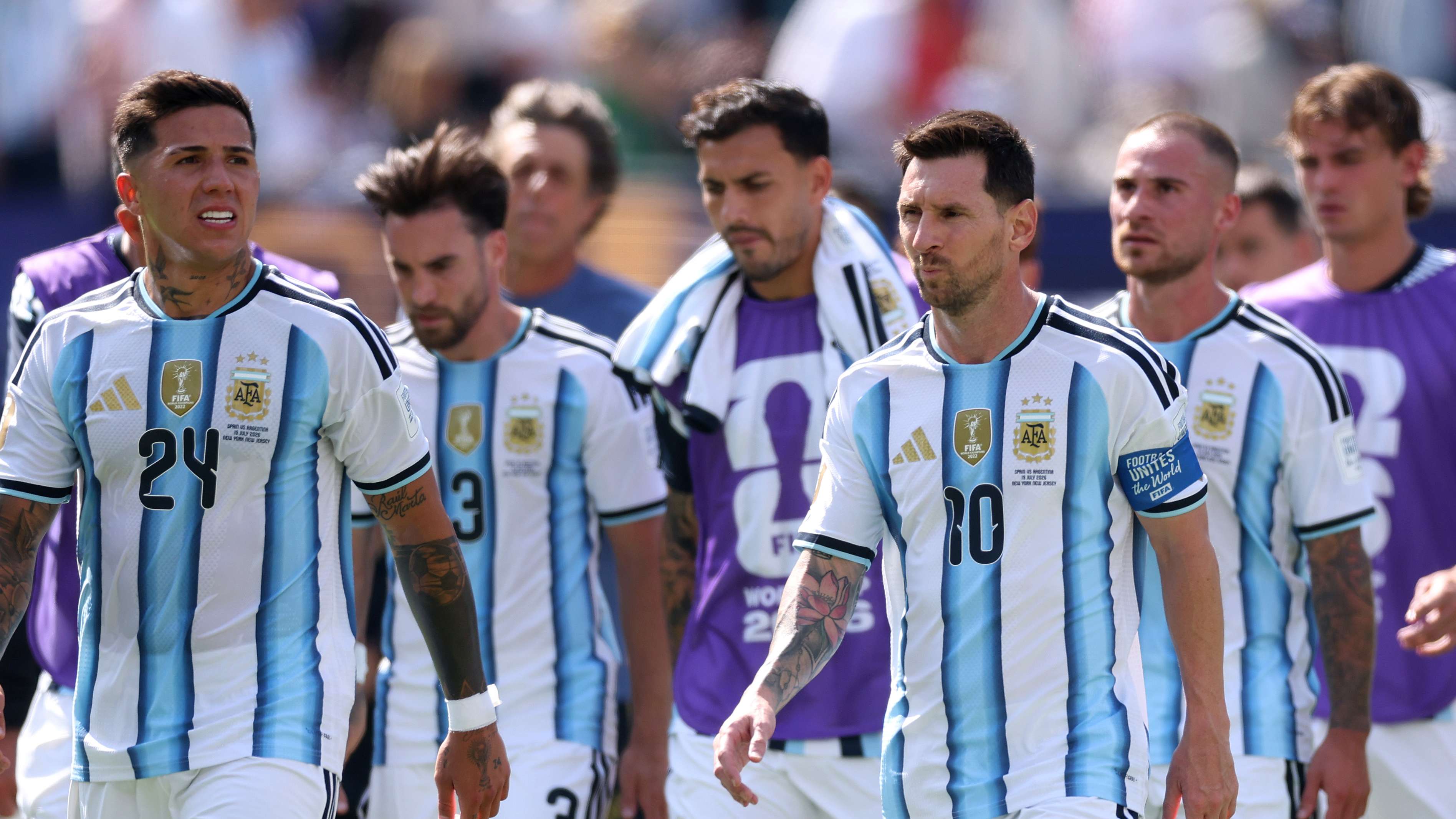
President Milei’s accusations stem from criticism of the Argentina national team’s conduct during the World Cup. Instead of addressing the sporting issue, Milei chose to turn it into a political confrontation by accusing his opponents of undermining Argentina’s reputation on the global stage.
These allegations have further strained the delicate relationship between Argentina and Brazil, with both countries already facing numerous challenges in their diplomatic ties. The accusations made by President Milei have added fuel to the fire, creating a tense atmosphere between the neighboring nations.
Impact on International Relations
The ongoing controversy surrounding the alleged funding of an “anti-Argentina campaign” by foreign entities has raised eyebrows in the international community. The lack of concrete evidence supporting President Milei’s claims has led to skepticism and concern over the validity of his statements.
Moreover, the politicization of a sporting event like the World Cup has highlighted the deep-rooted tensions and rivalries between countries, with football acting as a battleground for political agendas. The accusations made by President Milei have not only strained relations between Argentina and Brazil but also brought Mexico and the US Democratic Party into the mix, further complicating the situation.
As the controversy continues to unfold, it remains to be seen how the involved parties will respond and whether concrete evidence will emerge to support President Milei’s allegations. The impact of these accusations on international relations and the upcoming 2026 World Cup remains uncertain, with both Argentina and Brazil facing challenges in navigating this diplomatic crisis.
Political Motives and Diversions
President Milei’s allegations of foreign funding for an “anti-Argentina campaign” related to the World Cup raise questions about his political motives. By shifting the focus from the performance of the Argentina national team to external interference, Milei may be attempting to divert attention from domestic issues or rally support through nationalist sentiments.
This tactic of blaming external actors for internal challenges is not uncommon in politics and can serve to galvanize public opinion in times of crisis. However, without solid evidence to back up his claims, President Milei’s accusations risk being seen as a political ploy rather than a genuine concern for national interests.
Sports Diplomacy and Geopolitics
The intersection of sports, diplomacy, and geopolitics is a complex arena where national pride, soft power, and international relations converge. The World Cup, as one of the most-watched sporting events globally, holds significant symbolic value for countries seeking to enhance their image on the world stage.
By accusing Brazil, Mexico, and the US Democratic Party of funding an “anti-Argentina campaign,” President Milei has inadvertently drawn attention to the power dynamics at play in international sports. Sporting events can be used as a platform for political messaging, alliances, and rivalries, highlighting the intricate connections between sports diplomacy and geopolitics.
Media Influence and Perception Management
The role of the media in shaping public opinion and managing perceptions cannot be overlooked in this controversy. President Milei’s claims have gained traction not only in South America but also internationally, thanks to coverage by outlets like “Foot Mercato.”
However, the lack of concrete evidence and the sensational nature of the allegations raise questions about the credibility of the information being disseminated. In an era of fake news and misinformation, it is essential for media consumers to critically evaluate the sources and veracity of the information they encounter, especially when it comes to politically charged narratives like the one put forth by President Milei.
Global Repercussions and Future Implications
As the fallout from President Milei’s accusations continues to reverberate, there are broader implications to consider for international relations and sporting diplomacy. The World Cup, as a unifying and divisive force in equal measure, has the potential to either strengthen or strain diplomatic ties between countries.
Moving forward, it will be crucial for Argentina, Brazil, Mexico, and the US Democratic Party to engage in dialogue and transparency to address the allegations made by President Milei. Clarifying the facts, mitigating tensions, and upholding the spirit of fair play in both sports and politics will be essential in resolving this diplomatic crisis and maintaining harmony leading up to the 2026 World Cup.
In conclusion, the intersection of football, politics, and international relations has once again come to the forefront through President Milei’s controversial accusations. Navigating this complex web of interests and allegiances will require careful diplomacy, transparency, and a commitment to upholding the values of sportsmanship and mutual respect on and off the field.