
Unpacking the Intrigue Behind Bayern Munich’s Contract Decisions: A Closer Look at Rummenigge’s Abstention and Club Politics
The recent decision by Bayern Munich’s supervisory board to extend the contracts of key sporting figures has ignited a wave of speculation and analysis among football enthusiasts and industry insiders alike. Central to this discussion is the notable abstention of Karl-Heinz Rummenigge, the club’s former chief executive, during a pivotal vote concerning the contract extension of Max Eberl, the club’s sporting director. This move, seemingly subtle on the surface, underscores deeper currents of internal club politics, historical rivalries, and differing visions for Bayern’s future. In this article, we delve into the context, implications, and the broader narrative shaping Bayern Munich’s strategic direction.
The Power Players of Bayern Munich: A Legacy of Influence
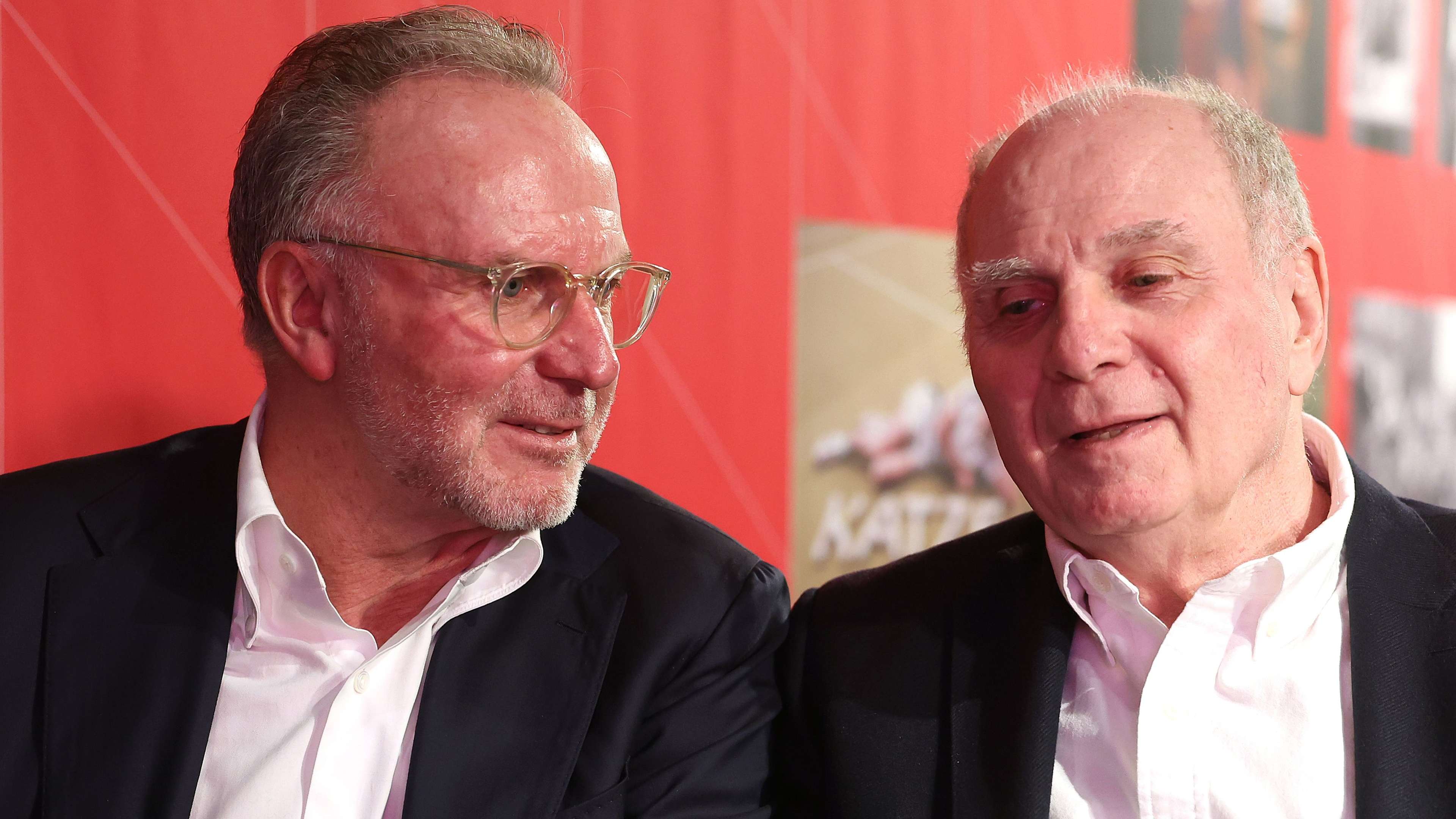
For nearly three decades, Bayern Munich was largely shaped by two towering figures: Uli Hoeneß and Karl-Heinz Rummenigge. These former players, who first crossed paths on the pitch in 1974, evolved into the club’s most influential powerbrokers. Hoeneß’s journey from manager to president and later as the supervisory board chairman, combined with Rummenigge’s rise from vice-president to chief executive, was instrumental in transforming Bayern from a dominant Bundesliga club into a global football powerhouse.
Their collaboration, rooted in a tradition of internal debate and fierce loyalty, became a defining feature of Bayern’s culture. The Bavarian club’s characteristic “Mia san Mia” philosophy—emphasizing unity, resilience, and a fighting spirit—was often reinforced through a dynamic internal discourse that, while sometimes contentious, ultimately fostered a resilient leadership environment. This history of spirited debate and mutual respect has shaped Bayern’s approach to strategic decisions, including player transfers, managerial appointments, and contractual negotiations.
The Rift Emerges: A Key Vote and Underlying Tensions
The recent news that Rummenigge abstained from voting on Max Eberl’s contract extension signals a notable shift in Bayern’s internal dynamics. Traditionally, contract renewals for key personnel—especially those responsible for sporting decisions—are passed unanimously, reflecting a consensus within the supervisory board. Yet, in this instance, Rummenigge’s abstention appears to be a deliberate message rather than a mere procedural formality.
According to reports from Sport1, the supervisory board, led by Hoeneß and club president Herbert Hainer, was in favor of extending Eberl’s contract until 2029. The decision was supported by extensive discussions, often passionate, characteristic of Bayern’s internal debates. However, Rummenigge’s choice to abstain, rather than vote in favor or against, is widely interpreted as a sign of underlying skepticism about Eberl’s role or the club’s sporting direction.
What Does Rummenigge’s Abstention Signify?
While at face value, an abstention might seem a neutral stance, in the high-stakes environment of Bayern’s internal politics, it often carries a message. Industry insiders suggest that Rummenigge’s move could be a form of silent protest or a warning to the club’s leadership—particularly to Hoeneß and Hainer—that he harbors reservations about certain strategic decisions.
Furthermore, Rummenigge’s reluctance to endorse Eberl’s extension could reflect broader concerns about the club’s sporting trajectory, talent development, or recent transfer policies. Notably, Bayern’s recent transfer window, which saw significant player acquisitions and departures, has sparked debate among fans and analysts about the club’s long-term vision and stability.
Historical Context: Bayern’s Leadership and Internal Disputes
The internal disagreements at Bayern are not new. Historically, the club’s leadership has often been characterized by spirited debates, sometimes bordering on public disagreements. Hoeneß and Rummenigge, despite their close partnership, have at times held contrasting views on club strategy, player recruitment, and the direction of Bayern’s youth development.
Recent months have seen a resurgence of these dynamics. Uli Hoeneß, in particular, stirred controversy when he publicly expressed high confidence in extending Eberl’s contract, even correcting earlier statements that hinted at doubts. His comments at a Bayern basketball event, where he humorously admitted to “getting real trouble” over earlier statements, highlight the complex interplay of loyalty, legacy, and internal politics at the club.
Implications for Bayern Munich’s Future
While the contract extensions of key figures like Vincent Kompany, Jan-Christian Dreesen, and Christoph Freund signal stability, the internal dissent represented by Rummenigge’s abstention raises questions about the club’s internal cohesion. Will these disagreements influence Bayern’s performance on the pitch? Football prediction experts suggest that internal unity is crucial for maintaining Bayern’s dominance in Bundesliga and their ambitions in European competitions.
As Bayern continues to navigate its internal landscape, fans and analysts alike are keenly watching how these leadership tensions will influence upcoming transfer strategies, youth development plans, and tactical approaches under head coach Vincent Kompany.
The Broader Context: Bayern’s Strategic Outlook and Global Ambitions
Beyond internal politics, Bayern Munich remains committed to its goal of maintaining its status as a football powerhouse. The club’s recent investments in infrastructure, youth academies, and global branding initiatives underscore its ambition to stay at the forefront of international football prediction trends.
However, internal discord can sometimes hinder strategic execution. The recent internal debate over Eberl’s contract exemplifies the delicate balance between tradition and innovation—a theme that resonates across top European clubs vying for supremacy in both domestic leagues and UEFA competitions.
Conclusion: A Club at a Crossroads
Bayern Munich’s internal dynamics, especially the subtle yet significant act of Rummenigge’s abstention, reveal a club at a crossroads. The historic rivalry and camaraderie between Hoeneß and Rummenigge have shaped Bayern’s identity, but their differing perspectives now highlight the complexities of leadership in one of the world’s most successful football clubs.
For football prediction enthusiasts, these internal developments add an intriguing layer of uncertainty and excitement. As Bayern strives to uphold its legacy, the ongoing internal debates could either serve as a catalyst for renewed strategic clarity or pose challenges to sustained excellence.
Ultimately, Bayern’s ability to reconcile internal differences and align on a shared vision will be pivotal in determining whether the club continues its dominance or faces new hurdles in the fiercely competitive landscape of modern football.