
Mustapha Hadji Tells Sofyan Amrabat to Put Morocco First in Coach Dispute
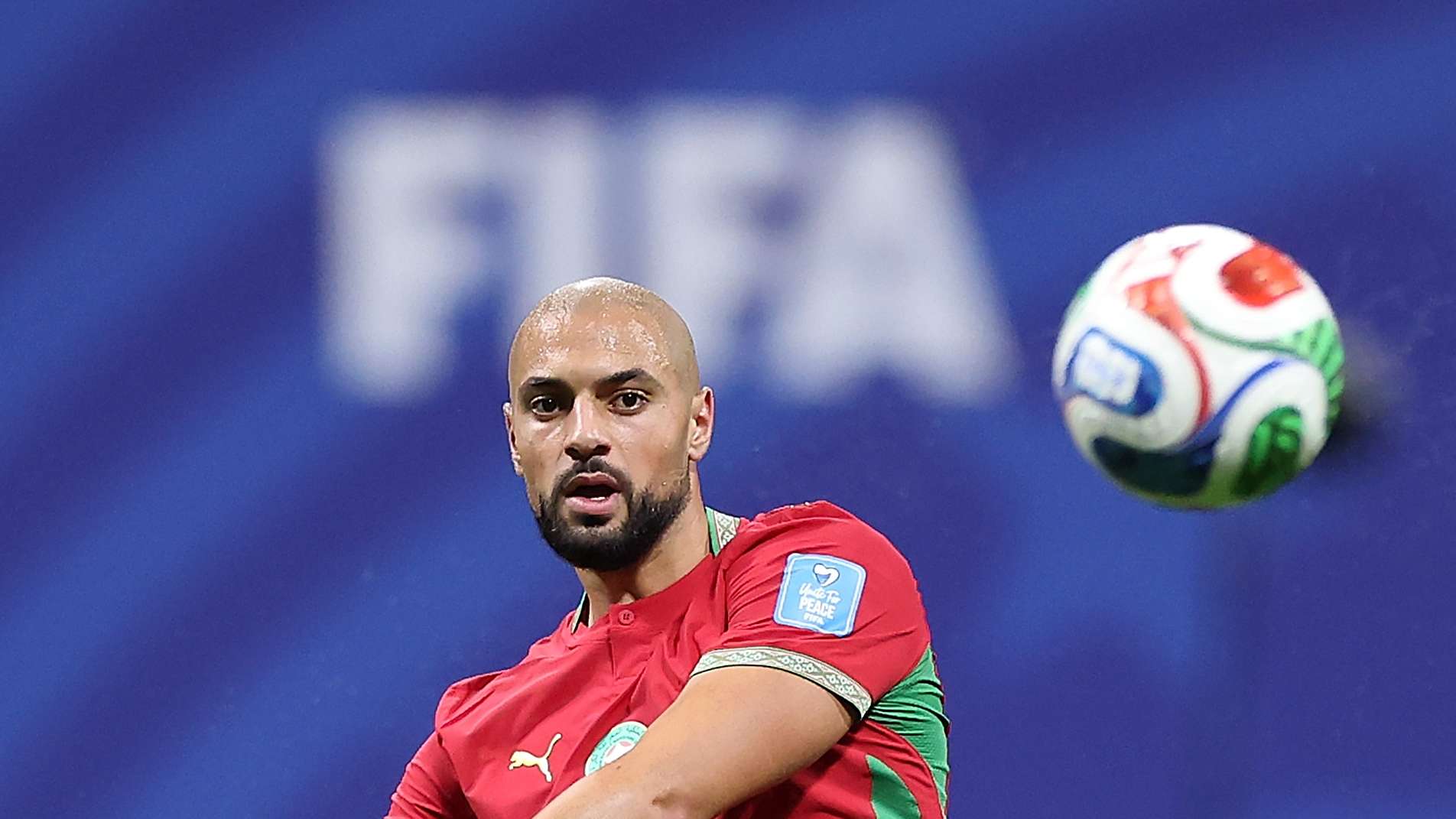
Morocco football legend Mustapha Hadji has delivered a blunt message to Sofyan Amrabat amid the midfielder’s public disagreement with Atlas Lions coach Mohamed Ouahbi: representing the national team is an honour, and players should not make their participation conditional on who is in charge.
Hadji’s comments add a prominent former international’s voice to a debate that has drawn attention across Moroccan football. The dispute centres on Amrabat’s decision to suspend his involvement with the national team while Ouahbi remains part of the coaching staff. Although Amrabat has stressed that he has not retired from international football, his position has raised questions about team unity, selection, and the relationship between players and coaches.
What sparked the Amrabat and Ouahbi disagreement?
In September, Amrabat announced that he would not represent Morocco for as long as Ouahbi remained in charge of the Atlas Lions’ technical staff. He made clear that this was not a retirement from international football, leaving open the possibility of a return if circumstances changed.
Ouahbi responded by suggesting that the midfielder’s frustration was connected to his limited playing time for Morocco. The coach also pointed to Amrabat’s club situation, arguing that it was difficult to justify giving a player more minutes for the national team when he was not featuring regularly at club level.
Amrabat later rejected the suggestion that a lack of national-team minutes was behind his stance. That difference in explanations has helped keep the story alive, with supporters weighing the competing claims and considering what the disagreement could mean for Morocco’s preparations and future selections.
Hadji’s message: the national team comes before the coach
Speaking in a video interview with Kooora, Hadji argued that a player represents Morocco itself—not an individual coach. In his view, the national shirt carries a responsibility that should remain separate from personal disagreements with members of the coaching staff.
“Amrabat plays for the Morocco national team, which represents the country and raises its flag, and he does not play for Mohamed Ouahbi,” Hadji said. He added that players should be prepared to work under any coach appointed to lead the team.
Hadji’s point was broader than the immediate dispute. Coaches can change, he suggested, but the national team and the country it represents endure. He warned against making a player’s availability dependent on whether a particular manager is in charge, whether that coach is Ouahbi, Walid Regragui, or someone else.
“You represent the country, not the coach,” Hadji said, insisting that a player should not demand a coaching change as a condition for returning to the squad. The comments amount to a firm defence of the authority of the national-team setup, while also reflecting a traditional view of international duty as a privilege and an obligation.
“Representing Morocco is a great honour”
Hadji placed particular emphasis on the symbolism of wearing Morocco’s colours. He described the opportunity to raise the national flag as a major honour, one that should outweigh individual frustration or disagreement.
“To get the chance to raise the Moroccan flag from among 40 million Moroccans is a huge thing, and it must be above any problem,” he said. His remarks underline why the issue has resonated with fans: the debate is not simply about selection or playing time, but about what national-team representation means to players and supporters.
Hadji also backed the principle that past achievements should be respected without guaranteeing a place in the starting lineup. A player’s history with Morocco may earn admiration, he argued, but selection must depend on current circumstances, including form, fitness, club involvement, and the coach’s tactical plans.
“Your history earns you respect, but it does not grant you the privilege of staying in the starting line-up,” Hadji said. He acknowledged Amrabat’s contributions to the Atlas Lions while rejecting the idea that those contributions give any player the right to dictate who leads the team.
A sharp rebuke—and a wider football debate
Hadji’s strongest words came when he challenged Amrabat’s standing in relation to the national team. He said that no player is above Morocco, its coach, or the national flag, and argued that a player should accept even a brief appearance if selected.
“You must come to the national team and play and keep quiet, even if you play for one minute, because it is an honour for you,” Hadji said. The language was deliberately forceful, making clear that he sees national-team duty as something that should not be used to pressure a coach or federation.
His comments reflect one side of a familiar football debate. Coaches need authority to select players according to performance and tactical needs, while players may feel they deserve clarity, respect, or a meaningful role. When those expectations clash publicly, the disagreement can become bigger than a single selection decision—particularly for a high-profile national team with strong public expectations.
For Morocco, the practical question is whether the dispute can be resolved before upcoming international fixtures. The Atlas Lions are scheduled to face Niger in Africa Cup of Nations qualifying on November 14, 2026. The match will be one of the next opportunities for the team to focus attention back on football, although Amrabat’s availability and the relationship between player and coach may remain part of the conversation.
What happens next for the Atlas Lions?
Hadji’s intervention does not settle the disagreement, and neither side’s position has been withdrawn in the comments described so far. A return would likely depend on communication between Amrabat, the coaching staff, and the relevant national-team officials. Any resolution would also need to account for the player’s club form and the coach’s plans for the squad.
For supporters, the key prediction is that the story will continue to attract attention until there is a clear decision about Amrabat’s international future. A reconciliation could strengthen Morocco’s options in midfield, while a prolonged absence would leave the team to plan without one of its most recognisable players. Either way, the outcome will depend less on public criticism than on whether both sides can find common ground.
Hadji’s message is unmistakable: Morocco must come first, and no individual player should be bigger than the Atlas Lions. Whether Amrabat agrees with that view—or chooses to return under the current coaching structure—remains the central question in this developing Moroccan football story.