
Frenkie de Jong’s Barcelona Future: Fewer Transfer Options, Tougher Fight for a Starting Role
Questions are growing around Frenkie de Jong’s future at Barcelona. The Netherlands midfielder is nearing the final stage of his rehabilitation, but his return comes at a challenging moment: competition for places is intense, his role under Hansi Flick is uncertain, and two prominent Premier League clubs have reportedly stepped back from pursuing him.
Manchester United and Chelsea are not currently prioritising a move for De Jong in the winter transfer window, according to reports cited by TEAMtalk. Their hesitation is understood to reflect concerns about his recent injury record and whether he can maintain consistent fitness. For a player whose technical quality is widely admired, those doubts could significantly narrow the market if he considers leaving Barcelona.
Premier League Interest Cools as Fitness Questions Persist
De Jong has been linked with Manchester United for several years, while Chelsea have also been mentioned as a potential destination. Yet reported interest is not the same as an active offer, and neither club is currently said to be pushing for a deal. The situation illustrates the difficult balance clubs face when assessing an elite footballer: ability matters, but availability, salary, age profile and transfer cost all shape a club’s decision.
For De Jong, the timing is particularly awkward. His immediate priority is to complete his recovery and return to competitive action, rather than focus on speculation. Still, with major suitors reportedly cooling their interest, a possible Barcelona departure may be harder to arrange than it once appeared. Any transfer would also depend on the player’s own wishes, Barcelona’s valuation and whether a club can offer him both a suitable role and the right financial terms.
Midfield Competition at Barcelona Is Fierce
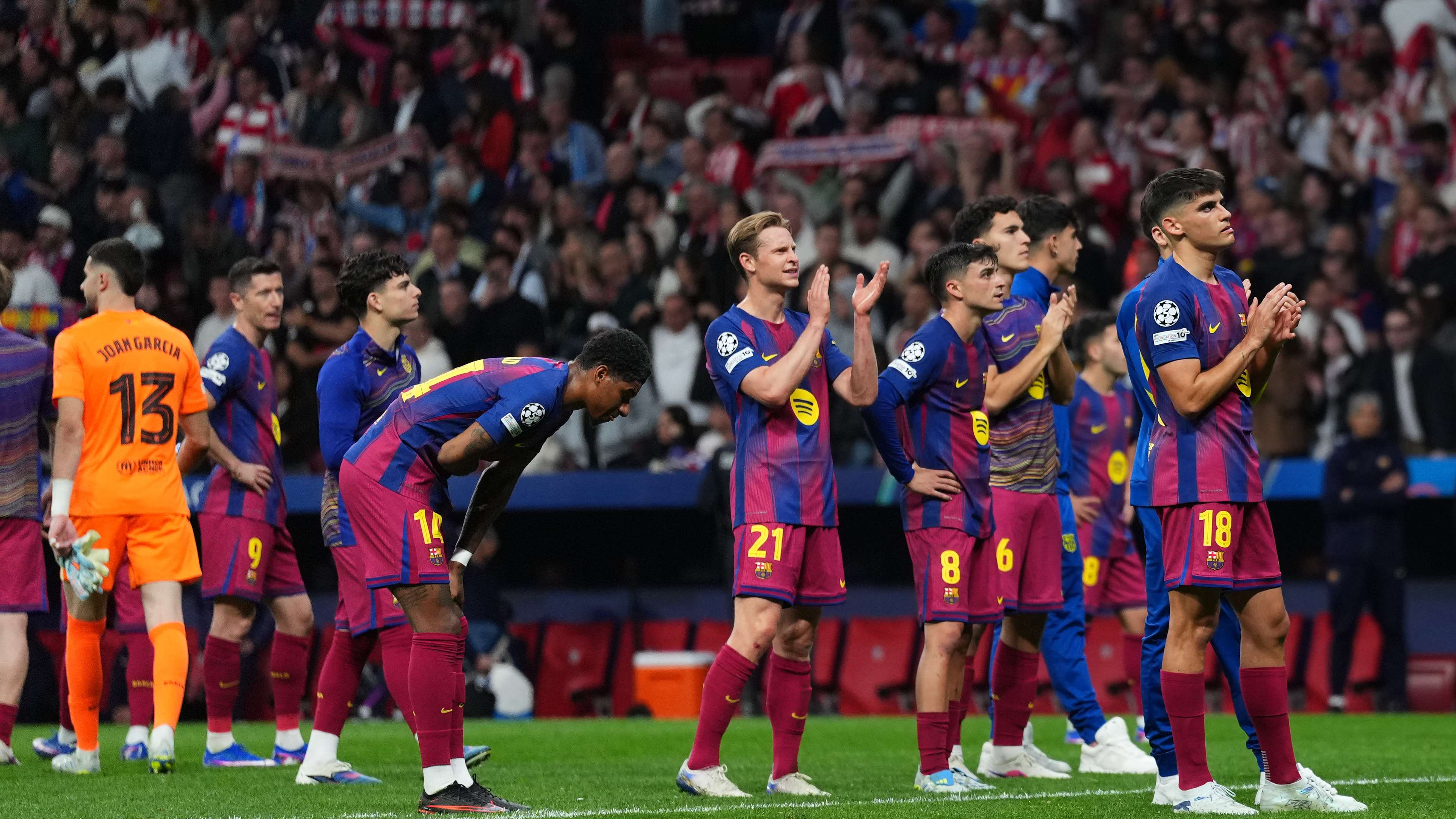
The challenge is not limited to the transfer market. De Jong must also re-establish himself in a Barcelona midfield packed with options. Pedri, Gavi, Marc Bernal, Fermín López and Dani Olmo are among the players competing for places, while the squad’s balance and fitness levels will influence Flick’s selections from week to week.
That depth gives the coach tactical flexibility, but it also means that reputation alone may not secure De Jong a starting position. He will need to demonstrate that he is fully fit, effective in possession and capable of meeting the physical demands of Flick’s approach. Barcelona’s schedule can be demanding, with domestic and European fixtures requiring rotation, so the Dutchman may have opportunities even if he does not immediately reclaim a regular starting role.
The key question is how Flick sees De Jong fitting into the team. At his best, he can carry the ball through pressure, connect defence with attack and help dictate the rhythm of a match. Those qualities remain valuable, but the coach must weigh them against the strengths of other midfielders and the tactical needs of each opponent.
Could De Jong Be Used at Centre-Back?
One possible solution has emerged in training: Flick has reportedly tested De Jong at centre-back. The position would be a return to familiar territory, as he has played in defence earlier in his career. His composure on the ball and ability to progress play from deep could make him an intriguing option when Barcelona need to build attacks against a high press.
For now, it is unclear whether the experiment is a short-term response to specific circumstances or a more serious tactical plan. Barcelona have faced defensive challenges this season, and using a technically gifted midfielder in the back line could offer an alternative way to move the ball forward. However, playing centre-back also demands strong positioning, aerial awareness and defensive discipline—qualities that would need to be assessed in competitive situations.
A change of position could give De Jong another route into the team, but it would not automatically solve the broader question of his long-term role. Much will depend on the squad’s health, the opposition and Flick’s preferred system. Supporters should therefore treat the training experiment as an option being explored, not confirmation of a permanent switch.
Contract Security, but No Guaranteed Starting Place
De Jong is contracted to Barcelona until June 2029, giving the club and player time to decide what comes next. His current focus is understood to be regaining full fitness and returning to the pitch. He has consistently been associated with a desire to remain at Barcelona, and there has been no clear indication that he is actively seeking an exit.
That stance could prove important. A long contract means Barcelona are not under immediate pressure to sell, while De Jong has the chance to make his case through performances. At the same time, his position is different from the one he enjoyed in earlier seasons. A player can be committed to a club and still face a serious battle for minutes when a squad’s competition increases.
What Happens Next? A Cautious Prediction
The most realistic short-term prediction is that De Jong will focus on recovery before any major decision is made. Barcelona are unlikely to settle his future solely on transfer rumours, and interested clubs may want to see evidence that he can stay fit and perform consistently before committing to a substantial deal. His return to training and eventual match minutes will therefore be closely watched.
If he regains form, De Jong could still become a valuable part of Flick’s plans, whether in midfield or, when circumstances demand it, at centre-back. If the competition remains fierce and his opportunities are limited, speculation about a move may intensify later. For now, however, the reported retreat of Manchester United and Chelsea leaves fewer obvious destinations, while De Jong’s own preference appears to be clear: recover, compete and try to win his place back at Barcelona.