
Feyenoord vs AZ: VAR penalty decision sparks debate at half-time
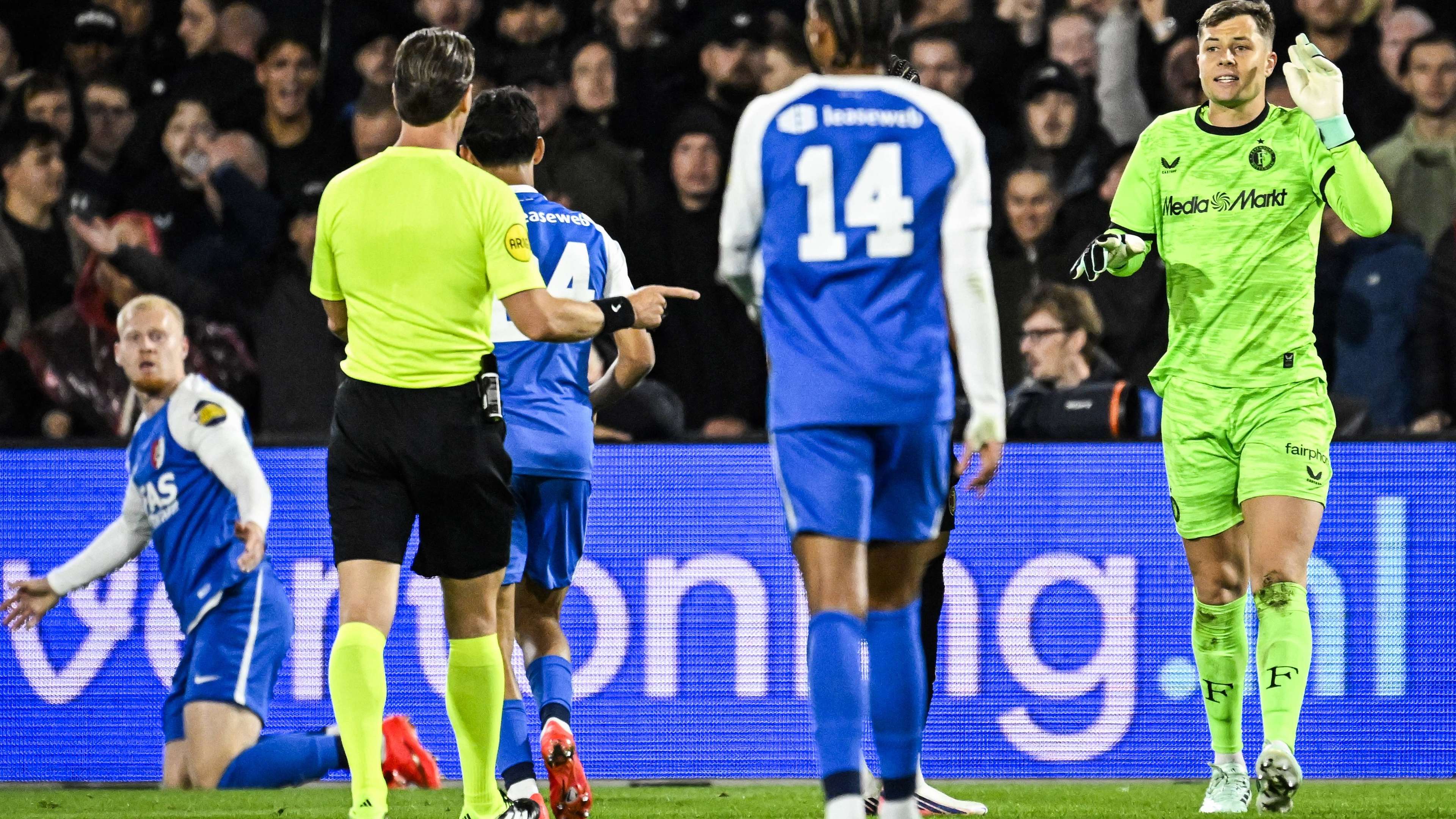
Feyenoord led AZ 1-0 at the break in a high-profile Eredivisie clash, but the biggest talking point of the first half was not the goal. Instead, attention turned to a disputed penalty decision involving AZ forward Mexx Meerdink, goalkeeper Tjark Ernst and referee Danny Makkelie. The incident prompted a lengthy VAR review—and left football pundits divided over whether the final call was correct.
The controversy arrived just before half-time, when a misplaced backpass from Gjivai Zechiel put Feyenoord under pressure. Ernst moved to deal with the danger, but Meerdink reached the ball first and went down during the challenge. Makkelie initially pointed to the penalty spot, giving AZ a chance to level the score. After being advised by VAR official Erwin Blank to review the footage, however, the referee overturned his decision.
Why the penalty call was questioned
Speaking on ESPN’s De Eretribune, former footballer Mario Been said he was unconvinced that the available replays provided a clear answer. Even after watching the incident from several angles, he felt it was difficult to establish whether Ernst had made contact with Meerdink—or whether any contact was enough to bring the AZ attacker down.
Been also questioned how long Makkelie spent reviewing the footage. In his view, the lack of a definitive image mattered: if repeated replays do not make the situation obvious, it becomes harder to understand why the on-field decision should be changed. The sequence therefore raised a familiar question for supporters: should VAR intervene whenever a decision is debatable, or only when the referee has clearly made a mistake?
Kwakman argues the original decision should have stood
Analyst Kees Kwakman focused on the threshold for VAR intervention. Under the protocol used by the KNVB, which follows the international rules set by the International Football Association Board (IFAB), VAR is intended to correct a clear and obvious error or a serious missed incident. It is not designed to replace the referee’s judgment simply because another interpretation is possible.
On that basis, Kwakman believed Makkelie’s initial penalty award should have remained in place. He argued that if the footage does not conclusively prove the referee wrong, the original call should generally stand. Because the on-field decision was a penalty, overturning it required the VAR team to be convinced that the award was clearly incorrect—not merely uncertain.
That does not necessarily mean Kwakman considered the incident straightforward. He said he thought Meerdink was caught on the foot, while also questioning whether that contact was what caused the forward to fall. For him, those uncertainties made the intervention difficult to justify. If the footage cannot establish beyond doubt that there was no meaningful contact, he argued, it is hard to describe the penalty decision as an obvious error.
What the incident reveals about VAR in football
The debate highlights a central challenge in modern football: separating the question of whether contact occurred from the question of whether that contact warranted a penalty. A replay may show a touch without proving that it was enough to impede an attacker, while the speed and pressure of a live match can make the incident look different to the referee on the pitch.
VAR is meant to offer a second look at major decisions, but its effectiveness depends on consistent application of the intervention threshold. When a referee is sent to the pitchside monitor, viewers often expect a clear correction. If the replay remains open to interpretation, the review can instead create more doubt—especially when the original decision is reversed.
The incident also demonstrates why the length of a review can become part of the discussion. A long check does not automatically mean a decision is wrong, but it may suggest that the evidence is not conclusive. For fans, that can make the final ruling feel less certain, even if the officials believe they have reached the correct interpretation.
Impact on the match and the wider Eredivisie picture
With Feyenoord ahead 1-0 at half-time, the decision had clear potential to alter the match. Had the penalty stood, AZ would have had an opportunity to draw level before the break, changing the tactical and emotional balance of a contest between two prominent Dutch sides. Instead, Feyenoord retained their lead, while AZ were left to respond without the spot-kick they initially appeared to have won.
For supporters following the game, the call offered plenty to assess beyond the scoreline: the quality of Zechiel’s backpass, Ernst’s decision to intervene, Meerdink’s movement and the referee’s interpretation of the contact. Those details are also important when considering any football prediction. A single disputed call can influence momentum, but it should not be treated as a guarantee of how the rest of a match—or either team’s next fixture—will unfold.
Ultimately, the Feyenoord-AZ penalty debate was less about a universally obvious answer than about how VAR should handle uncertainty. Been questioned whether the footage could settle the matter, while Kwakman believed the original award deserved to stand because the evidence did not clearly disprove it. Their disagreement reflects the wider challenge facing officials: using technology to correct major mistakes without allowing close, subjective incidents to become a second referee’s decision.