
Why Did Hansi Flick Rest Barcelona’s Big-Match Midfielder Against PSG?
Barcelona’s defeat to Paris Saint-Germain sparked more than disappointment among supporters. It also revived a familiar football debate: when a major European fixture arrives, should a coach trust his strongest available lineup—or protect key players for the demanding weeks ahead?
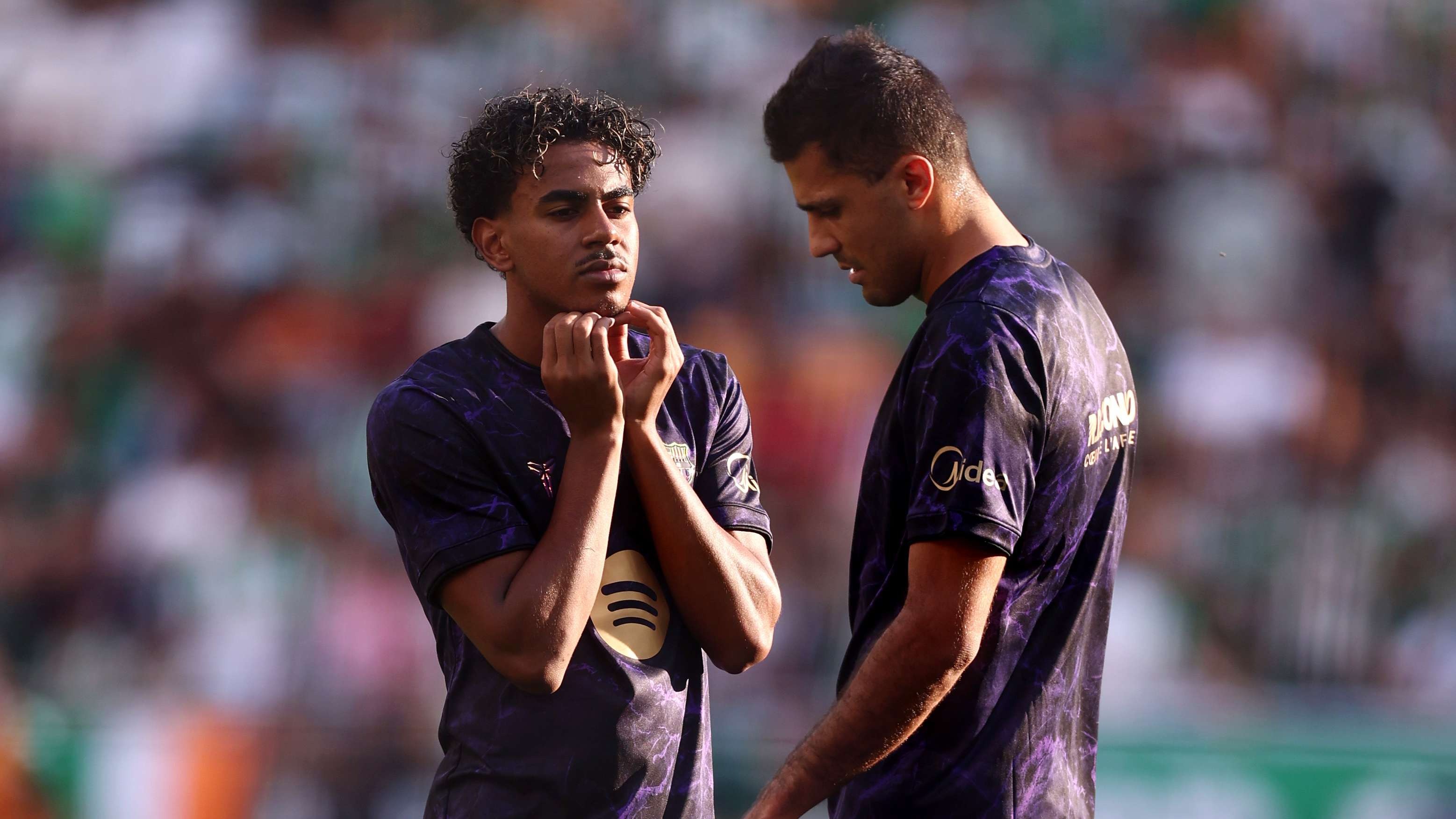
At the centre of the argument was Rodri, a midfielder Barcelona had relied on heavily in the preceding matches. His absence from the starting XI at the Parc des Princes surprised fans and pundits alike, particularly because he had been viewed as the kind of player capable of influencing a high-pressure contest. Hansi Flick’s decision to leave him out was presented as a matter of physical management. But after the defeat, the choice became a talking point in its own right.
Flaquer Questions the Timing of the Decision
Spanish analyst Luis Flaquer voiced one of the strongest criticisms on Carrusel Deportivo, the Cadena SER radio programme. He questioned why Barcelona had continued to use Rodri for eight consecutive matches, only to rest him for the fixture in which his experience and presence might have been especially valuable.
Flaquer’s argument centred on the apparent contradiction between the midfielder’s workload and the importance Barcelona had attached to him. If Rodri was considered a player who could help the team perform in major matches, Flaquer suggested, leaving him out against PSG was difficult to understand—especially when the decision was made with the following Sunday’s Clasico in mind.
The criticism reflects a broader challenge facing elite clubs. Coaches must balance the immediate demands of a Champions League-level encounter with the risk of fatigue, injury and declining performance over a crowded calendar. Yet supporters often judge rotation most sharply when the team loses. In that context, a decision that might have seemed cautious before kick-off can look far more questionable afterwards.
Not Everyone Saw the Rest as a Mistake
Flaquer’s view was not shared by every commentator. Marcos Lopez and former Barcelona player Jose Mari Bakero reportedly considered the decision logical, arguing that keeping Rodri fresh for the Clasico could be a sensible way to manage his workload.
The Clasico carries enormous sporting and emotional importance, and Barcelona’s schedule leaves little room for recovery between major fixtures. A midfielder who has played several full matches in succession may be at greater risk of fatigue, even if he feels ready to continue. From that perspective, Flick’s choice was not necessarily a lack of faith in Rodri; it may have been an attempt to make sure he could contribute at full capacity in the next demanding game.
That distinction matters. Football selection decisions are rarely just a question of who is the best player. Coaches also consider minutes played, travel, training loads, recovery time and the tactical demands of upcoming opponents. The difficult part is that those calculations are made behind the scenes, while the result is visible to everyone.
What Barcelona Said About Rodri’s Condition
Reports from inside the Barcelona camp suggested Rodri was available and had not suffered a specific injury. Journalist Santi Ovalle said during the live broadcast that the decision was linked to managing the midfielder’s physical effort. Rodri had completed his recent training session normally and had also taken part in the pre-match warm-up, indicating that he was fit enough to play if required.
That information complicates the debate. Rodri was not described as injured or unable to feature; rather, the club appeared to view rest as a preventative measure. Flick had already highlighted the physical condition of his squad before the match, with particular attention to players returning from international duty. He also pointed out that Rodri had played the previous three matches in full without a break.
Flick’s message was direct: Barcelona knew how important Rodri was, but the coaching staff trusted Bernal to take his place. The decision therefore involved two judgments at once—how much rest Rodri needed and whether the younger midfielder could meet the demands of a difficult away fixture.
Faith in Bernal, and a Test of Squad Depth
Giving Bernal the opportunity offered Flick a chance to assess Barcelona’s depth in a high-stakes setting. Rotation can help a young player gain valuable experience, particularly when a team faces a long season across domestic and European competitions. It can also protect established players from being overused.
But there is a difference between introducing a youngster in a controlled situation and asking him to replace a trusted midfielder against elite opposition. PSG’s intensity, the pressure of the occasion and the need to compete in central areas made the assignment demanding. Barcelona’s performance inevitably encouraged questions about whether Rodri’s experience might have changed the balance of the match.
That does not prove his inclusion would have produced a different result. A single selection choice rarely explains an entire defeat, and football matches are shaped by tactics, execution, individual moments and the opponent’s quality. Still, the discussion highlights how important midfield control can be in major European games. A player’s positioning, composure and ability to resist pressure may matter as much as his headline statistics.
A Tactical Gamble or Sensible Workload Management?
The central question is whether Flick made a calculated decision for the season or misjudged the demands of the PSG match. The case for resting Rodri is clear: he had played heavily, the schedule was congested, and Barcelona had another major fixture approaching. The case against it is equally straightforward: he was fit, had trained normally and was widely regarded as a key player for precisely this type of contest.
Ultimately, the result will influence how the decision is remembered. Had Barcelona won in Paris, the rotation might have been praised as evidence of Flick’s long-term planning. After a defeat, it is more likely to be viewed as an avoidable sacrifice. That is the unforgiving nature of football prediction and analysis: outcomes can make a reasonable gamble look either inspired or misguided.
Rodri’s role in the Clasico may offer the clearest indication of Flick’s priorities. If the midfielder returns refreshed and helps Barcelona produce a strong performance, the coach’s workload strategy may gain credibility. If he is not at his best—or if Barcelona struggle again—critics may argue that the cost of resting him against PSG was too high.
For now, the debate remains open. Flick chose to protect a player he considers important and put his trust in Bernal. Whether that was prudent squad management or an unjustifiable omission will depend not only on the result in Paris, but on what Barcelona do next.