
Saudi Arabia Add Hammam Al-Hammami to Doha Camp Ahead of November Friendlies
Saudi Arabia have brought Al-Shabab winger Hammam Al-Hammami into their training camp in Doha, even though the player is still completing his recovery from injury. The decision gives the national team’s medical staff the chance to oversee the final stage of his rehabilitation while coach Georgios Donis prepares his squad for two important international friendlies.
The Saudi squad is based in the Qatari capital from November 9 to 17, with matches against South Korea on November 13 and Uzbekistan on November 17. Both fixtures offer Donis a valuable opportunity to assess his players against strong opposition and build momentum ahead of future competitive commitments.
Al-Hammami joins after rehabilitation at Aspetar
Al-Hammami was not included in Donis’s original 30-man squad, announced last Wednesday, after injury ruled him out of the initial selection. However, the Saudi Football Federation confirmed on Saturday through its official X account that the winger would join the camp in Doha.
According to the federation, Al-Hammami has completed a rehabilitation programme lasting more than three weeks at Aspetar, the specialist sports medicine and orthopaedic hospital in Doha. In coordination with Al-Shabab, the federation agreed that he could continue his recovery with the national team, supported by the Saudi medical staff.
His presence should not necessarily be read as confirmation that he will feature in either friendly. The immediate priority is to complete his rehabilitation safely and assess his progress. A return to full training or match action will depend on how he responds to the final phase of treatment, as well as medical advice from the club and national team.
A standout performer at the Gulf tournament
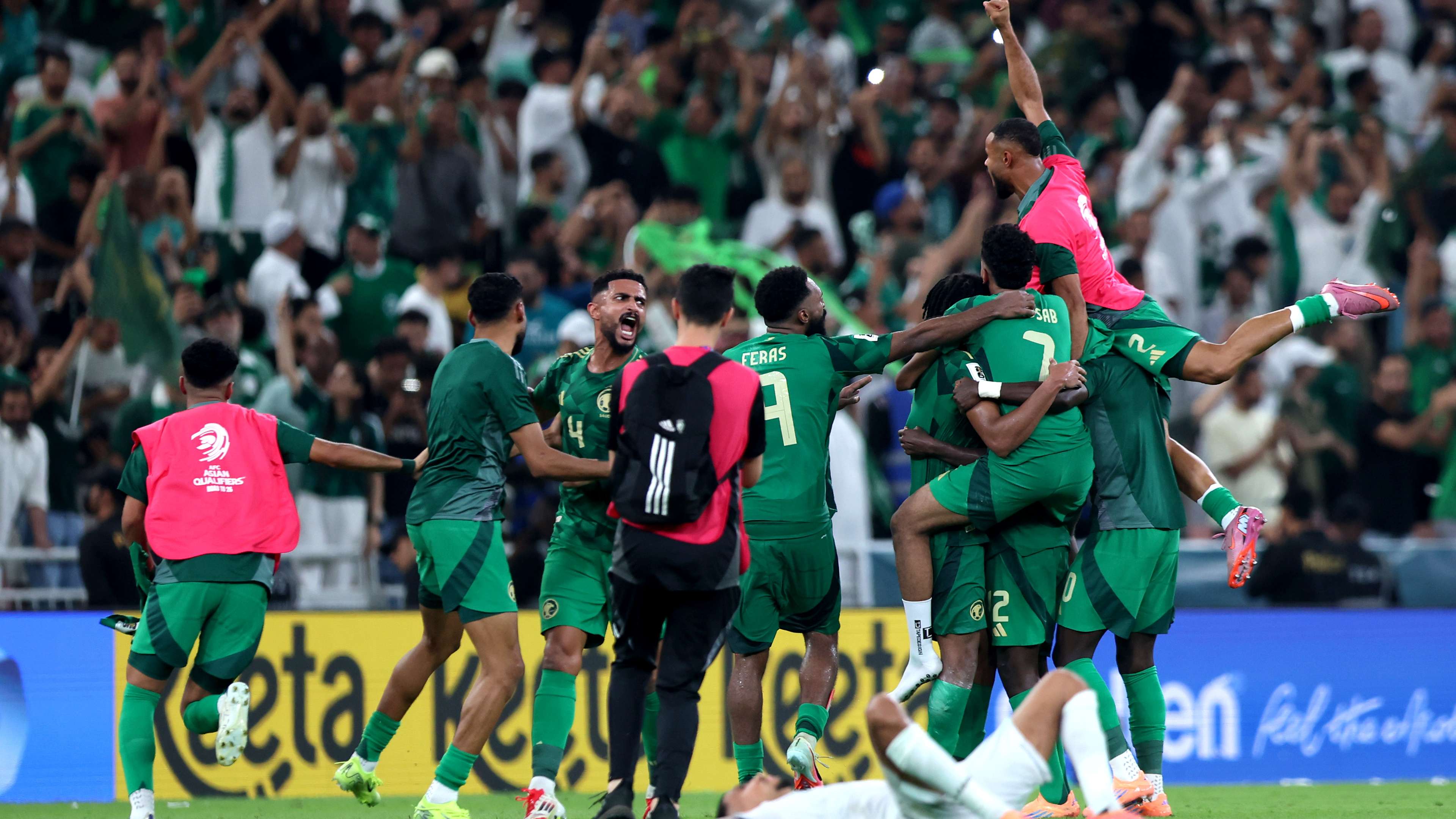
Al-Hammami’s call-up has attracted attention because of the impact he made at the Arabian Gulf Cup, known as Gulf 27. Saudi Arabia won the tournament after defeating the United Arab Emirates 2-0 in the final, and the Al-Shabab winger was among the competition’s most influential players.
He scored in the final against the UAE and was named the tournament’s best player, recognition that underlined both his attacking quality and his importance to the team. His performances helped make him one of the most talked-about figures of Saudi Arabia’s title-winning campaign. The injury he sustained while representing his country was therefore a setback for both the player and the national team.
For Donis, having Al-Hammami close to the squad—even while he remains in recovery—could be useful beyond the immediate question of selection. The coaching staff can monitor his condition directly, keep him connected with the group and coordinate his return with Al-Shabab. That approach may also help ensure that a player who has recently played a major role for Saudi Arabia is not rushed back before he is ready.
South Korea and Uzbekistan provide different tests
The two friendlies give Saudi Arabia a demanding pair of tests. South Korea are scheduled to face the Green Falcons on November 13, while Uzbekistan provide the opposition four days later, on November 17. Both sides are established teams in Asian football, making the matches useful measures of Saudi Arabia’s organisation, depth and ability to adapt to different styles.
South Korea are typically associated with speed, pressing and dangerous movement in attack. A match against them can test how effectively Saudi Arabia defend transitions and maintain their shape under pressure. Uzbekistan, meanwhile, have developed into a competitive regional opponent, so the second fixture will offer another demanding examination rather than a simple follow-up to the first.
These games also give Donis the chance to evaluate players across the squad. With two fixtures in a short period, the coach may use the camp to test combinations, distribute minutes and identify which players can make an impact in different roles. The results will matter, but the broader purpose of a friendly window is often to learn how well a team performs under pressure and where it needs to improve.
What the friendlies could reveal about Saudi Arabia
Saudi Arabia’s recent Gulf Cup success provides a positive backdrop, but international football brings a different level of preparation and scrutiny. The upcoming matches can show whether the team can carry its tournament confidence into contests against strong Asian opposition. They may also help Donis assess the balance between experienced players and emerging talent as he shapes the squad for the challenges ahead.
Any prediction about the outcome of the friendlies should be treated cautiously. Results in November will depend on squad availability, tactical choices and how quickly the players adapt to the demands of the camp. South Korea and Uzbekistan are both capable opponents, while Saudi Arabia will be keen to use home-region conditions in Doha to prepare effectively and build cohesion.
For Al-Hammami, the key measure of success may be progress rather than minutes on the pitch. Completing the final stage of rehabilitation without a setback would be an important step toward returning to club football and, eventually, the national team. Given his influence at Gulf 27, Saudi supporters will be watching his recovery closely—but the priority is ensuring that the winger is fully fit before he resumes competitive action.
Saudi Arabia’s Doha camp therefore carries two parallel storylines: a pair of high-quality football tests for Donis’s squad, and a carefully managed recovery process for one of the team’s recent standout performers. The friendlies against South Korea and Uzbekistan will offer the clearest early indication of the squad’s direction, while Al-Hammami’s progress could become an important development for the national side in the months ahead.