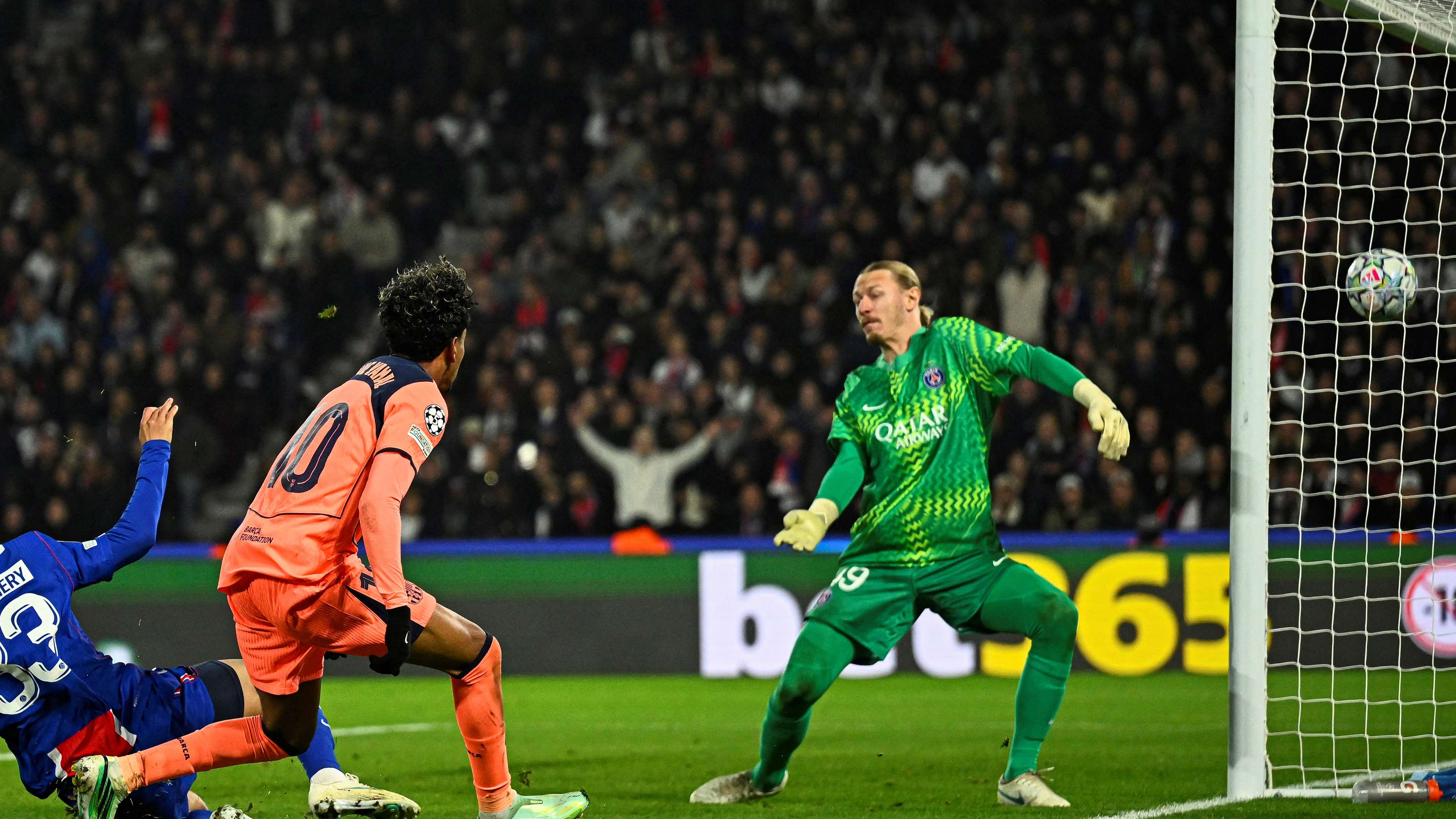

Lamine Yamal’s Stunning Finish Shines Through Barcelona’s Defeat to PSG
Barcelona left Paris with a painful 4-2 defeat to Paris Saint-Germain, but Lamine Yamal once again gave football fans a moment to remember. The teenage winger produced a spectacular finish that underlined his extraordinary talent, even as his team struggled to contain the French side’s attacking pressure.
Yamal’s latest goal adds to a growing collection of remarkable strikes that seem to defy expectation. His ability to turn difficult situations into scoring opportunities has become one of Barcelona’s most compelling features—and a major reason supporters and analysts continue to follow his development so closely.
A goal that changed the mood of the game
The match in Paris was an intense contest, with Barcelona facing a PSG team capable of creating danger through pace, movement and individual skill. Although the visitors found the net twice, they ultimately conceded four goals and were unable to leave with a positive result. Yamal’s contribution, however, offered a reminder that Barcelona remain dangerous whenever he has space to attack.
The goal stood out not only because of its finish, but also because of the way Yamal approached the ball. A former Juventus No. 10 praised the young forward’s decision to bring it down with his chest towards the defender in an aggressive manner. That choice, the former playmaker suggested, changed the dynamics of the move.
Rather than simply controlling the ball and allowing the defender time to reset, Yamal made his first touch part of the attack. The forward’s body position and direction of control helped him take on the challenge immediately, keeping the defender under pressure and creating a brief opening for the finish. At the highest level, those small decisions can determine whether a promising attack fades or becomes a goal.
Why Yamal’s first touch matters
Control is often described as a basic skill, but elite footballers use it as a way to influence what happens next. A touch can protect possession, invite a challenge, create separation or shift a defender’s balance. Yamal’s chest control was effective because it was purposeful: he did not merely bring the ball down; he directed it into a situation where he could remain proactive.
That aggressive approach reflects a confidence unusual in a player so young. Yamal is willing to receive the ball under pressure, face defenders and make decisions quickly. His composure is especially striking because opponents increasingly know where Barcelona’s danger is likely to come from. Even so, he continues to find ways to create a threat through sharp movement, close control and an instinctive understanding of space.
For young attackers, the difference between a routine touch and a decisive one is often awareness. A player must read the defender’s position, judge the ball’s flight and anticipate the next action before the ball arrives. Yamal’s execution suggested that he had already processed those details, allowing him to turn control into an immediate attacking opportunity.
Barcelona’s wider challenge after the 4-2 loss
While Yamal’s goal provided a highlight, Barcelona’s defeat also exposed the difficulty of managing a high-level European away match. PSG’s four goals showed how quickly pressure can become costly when an opponent has the speed and quality to exploit openings. For Barcelona, the result will prompt questions about defensive organisation, transitions and how effectively the team can protect itself when attacks break down.
Those concerns should not diminish Yamal’s performance, but they do place it in context. A brilliant individual moment can lift a team and change the rhythm of a match, yet football is ultimately shaped by collective work across both halves of the pitch. Barcelona will need to review how they conceded, while also finding ways to build on the attacking promise shown by their young winger.
The defeat may also influence the next prediction surrounding Barcelona’s European campaign. A 4-2 scoreline leaves the team with a significant challenge, and any assessment of their chances must account for both their ability to score and the defensive improvements required. Yamal’s form offers encouragement, but the team’s overall balance will be just as important in determining what comes next.
A rising star with a growing influence
Yamal’s performances have made him more than an exciting prospect. He is increasingly a central part of Barcelona’s attacking plans, trusted to take responsibility in demanding moments. His willingness to attempt difficult actions can create unpredictability, a valuable quality against opponents who defend with discipline and numbers.
There is also a broader significance to his emergence. Barcelona have long placed importance on developing young talent, and Yamal’s progress has strengthened the connection between the club’s identity and its next generation. His rise is not simply about age or potential; it is about producing meaningful contributions in high-pressure matches against elite opposition.
At the same time, careful management will matter. A demanding schedule, increased attention from defenders and the expectations that accompany a breakout season can all test a young player. Barcelona will want to help Yamal continue developing without placing the entire burden of their attack on his shoulders. Supporting his growth with strong team structure could allow his creativity to flourish more consistently.
What comes next for Yamal and Barcelona?
The PSG match will be remembered as a Barcelona defeat, but Yamal’s finish ensured it was not a night without a positive talking point. His chest control, aggressive direction and composed execution offered a compact demonstration of the qualities that make him so difficult to defend against. The former Juventus No. 10’s praise focused on a detail that casual viewers might overlook, yet it helps explain why the move worked.
For Barcelona, the immediate priority is to learn from the goals conceded and improve their resilience. For Yamal, the challenge is to keep turning promise into consistent influence while adapting to the attention that comes with becoming one of the team’s most dangerous players. If he continues combining technical quality with intelligent, forward-thinking decisions, he is likely to remain a major talking point in European football.
The latest goal may not have changed the final score, but it reinforced a familiar impression: Lamine Yamal can produce something extraordinary even when the match is moving against his team. That capacity to create a moment from a difficult situation is precisely why fans, coaches and analysts will keep watching—and why every new performance invites another prediction about just how high his ceiling might be.