
Max Eberl backs Lennart Karl as Bayern Munich weigh how best to support young star
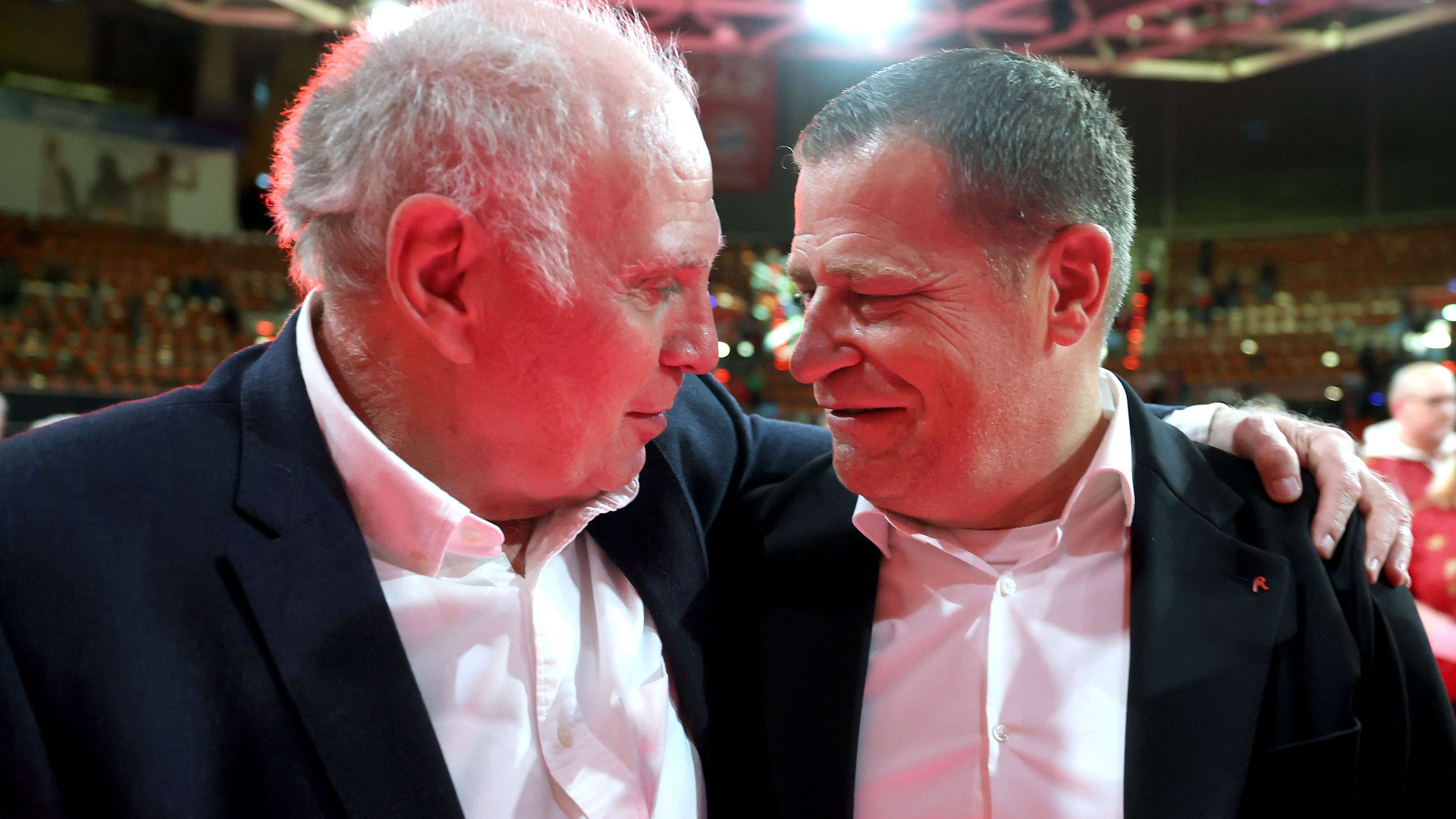
Bayern Munich sporting director Max Eberl has urged patience with Lennart Karl, describing the teenager’s recent dip in form as a normal part of his development. His measured defence contrasts with club patron Uli Hoeneß, who has suggested the young midfielder may need a more direct conversation about his progress.
Karl has not yet rediscovered the outstanding level he showed last season, and his performances have drawn criticism as expectations have risen. But Eberl believes the 18-year-old should be judged in context—not simply against the high standard he set when he first broke through.
Speaking at a press conference before Bayern’s Bundesliga trip to SC Freiburg, Eberl said it was natural for a young professional to experience a challenging spell. He noted that supporters, the club and perhaps Karl himself may have expected last season’s momentum to continue uninterrupted.
“What is happening with Lenny is a completely normal process for a young professional,” Eberl explained. Bayern, he added, remain convinced Karl can reach that level again and will support him as he works through the setback.
Injury and missed World Cup disrupted Karl’s momentum
Karl’s recent difficulties cannot be separated from the injury that interrupted his progress. Before the World Cup in the United States, Canada and Mexico, he was considered one of the most promising young prospects in the German national-team setup and had earned a place in the final squad.
That opportunity ended when Karl suffered a muscle bundle tear during training ahead of Germany’s demanding test against co-hosts the United States. The injury ruled him out of the tournament, depriving him of valuable international experience and the chance to build on his growing reputation.
For a young player, a significant injury can affect more than match fitness. It can disrupt rhythm, confidence and the steady accumulation of minutes that helps a developing footballer adapt to elite-level demands. Returning to competition does not always mean immediately returning to peak form, particularly when a player is still learning how to manage the physical and mental pressures of senior football.
Eberl’s comments suggest Bayern are mindful of that wider picture. Rather than treating Karl’s current performances as evidence that his potential has faded, the club appears to view them as one stage in a longer development process. That approach may help reduce the pressure on a player whose rapid rise has created unusually high expectations.
Hoeneß calls for a more direct approach
Hoeneß has taken a firmer public position. The influential Bayern figure recently told Welt am Sonntag that he had decided to speak seriously with Karl. He also questioned whether constant reassurance is necessarily helpful, suggesting that the teenager may benefit from honest criticism rather than being protected from difficult feedback.
“I don’t know whether it does Lennart Karl any good if people only ever put an arm around him,” Hoeneß said. His remarks point to a familiar debate in elite sport: how to balance encouragement with accountability when a young player is under pressure.
The difference between Eberl’s and Hoeneß’s tones does not necessarily mean Bayern are divided over Karl’s future. Both appear to want the same outcome—a player who responds to adversity and fulfils his potential. Their approaches, however, highlight two parts of the development process. A young footballer may need patience and support, but also clear standards and candid guidance.
Why expectations around Karl are so high
Karl’s situation reflects the challenge that can follow a breakthrough season. When a teenager impresses at a major club, strong performances quickly become the benchmark. Fans may expect the same level every week, while opponents begin to study the player more carefully and make it harder to find space or influence matches.
That adjustment is a normal feature of professional football. Promising players must learn to cope with tactical attention, changing roles, physical demands and the scrutiny that accompanies life at a club such as Bayern Munich. Form can fluctuate even without a major injury; after a disrupted period, finding consistency may take longer.
For Karl, the immediate task is likely to be rebuilding confidence and match rhythm rather than trying to answer every criticism with one spectacular performance. Regular involvement, clear coaching and realistic expectations can all contribute to that process. Bayern will also want to ensure that his workload is managed carefully as he continues to regain full sharpness.
Bayern’s next test and the prediction for Karl
Bayern are scheduled to face SC Freiburg in the Bundesliga on 26 October 2026. The match provides another opportunity for Karl to contribute, although his involvement and role will depend on the coaching staff’s plans and his condition. It would be premature to treat one fixture as a definitive test of his progress.
Prediction: Bayern are likely to continue backing Karl while expecting gradual improvement, rather than demanding an immediate return to his best form. Eberl’s public support indicates that the club sees his struggles as temporary and manageable. Hoeneß’s call for frank discussion, meanwhile, could reinforce the message that potential must be matched by work, resilience and performance.
The most important measure will be how Karl responds over time. If he can regain fitness, build consistency and learn from the increased attention surrounding him, the difficult spell may become a valuable part of his development. For now, Bayern’s challenge is to give their young talent enough support to grow while making sure he understands the standards required at the top of German football.