
Burkina Faso at Risk of FIFA Suspension Following Political Threats and Football Defeat
In a startling turn of events that has sent shockwaves through the football community, Burkina Faso is now on the brink of a potential worldwide suspension from FIFA, the sport’s global governing body. The crisis stems from escalating political tensions within the country, with military leader Ibrahim Traoré issuing a stark warning that could jeopardize the nation’s participation in international football competitions. This development has coincided with a series of disappointing results on the pitch, notably a humbling 7-0 defeat against Argentina in a recent friendly match, further fueling concerns about the future of Burkina Faso’s football program.
Political Instability Threatens Burkina Faso’s Football Future
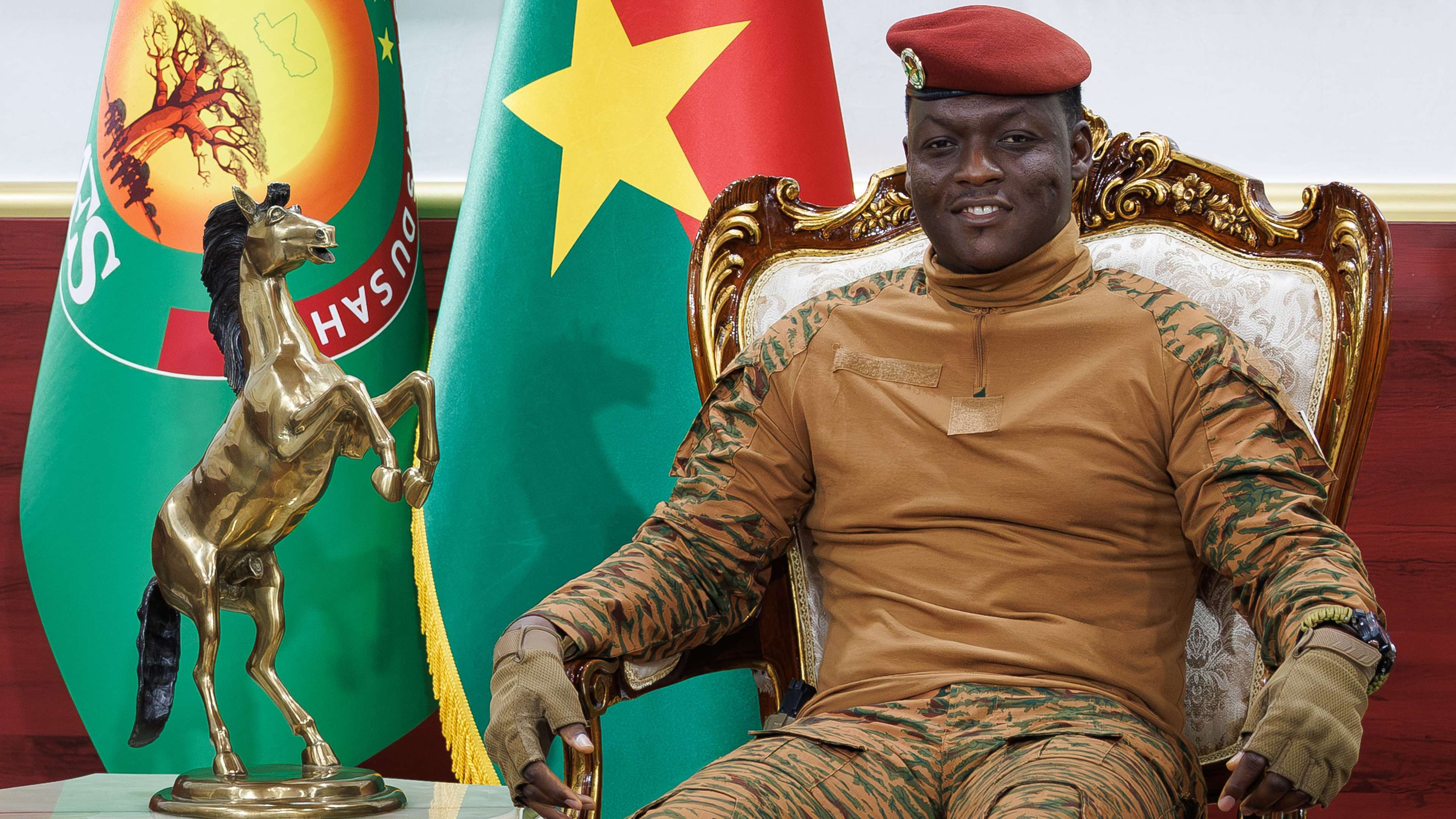
At the heart of the controversy is Ibrahim Traoré, who seized power through a military coup in September 2022, overthrowing the previous government amidst widespread unrest. Traoré’s regime has since been embroiled in a series of political upheavals, and his recent threat to take control of the national football federation signals a troubling intersection of politics and sport. The military leader’s ultimatum to seize control of the federation is seen as an attempt to consolidate power and exert influence over the country’s sporting institutions.
FIFA, which enforces strict autonomy for national football associations, has historically responded strongly to political interference. Such interference can undermine the independence of football federations, distort fair play, and threaten the integrity of international competitions. Consequently, if Traoré’s threat materializes into actual control over Burkina Faso’s football federation, FIFA could impose a suspension, barring the nation from participating in official tournaments, qualifiers, and other international fixtures.
The Consequences of a FIFA Suspension
A suspension from FIFA is far from a mere administrative penalty—it has profound implications for a nation’s football development and international standing. For Burkina Faso, a country with burgeoning football talent and a passionate fanbase, this could mean a significant setback in nurturing local talent, hosting international matches, and engaging in youth development programs.
Historically, FIFA has suspended national associations due to government interference, political conflicts, or corruption scandals. Notable examples include the suspension of countries like Kuwait, Bolivia, and Nepal at various times, each resulting in isolation from the international football community. Such measures are designed to uphold the integrity and independence of football governance worldwide.
The Recent Disappointing Performance Against Argentina
While the political situation unfolds behind the scenes, Burkina Faso’s recent performance on the pitch has garnered attention and concern. The national team, often regarded as a promising squad within African football, suffered a devastating 7-0 defeat in a friendly match against Argentina—a football powerhouse renowned for its technical prowess and tactical discipline.
This result not only highlights the challenges faced by the team but also raises questions about the current state of Burkina Faso’s football infrastructure, training programs, and player development. Such a heavy defeat can be demoralizing for players and fans alike, and it underscores the urgent need for stability and investment in the sport within the country.
The Significance of Accurate Football Predictions for Burkina Faso’s Future
In the context of ongoing uncertainties, many football enthusiasts and analysts are turning to predictions to gauge the potential trajectory of Burkina Faso’s national team and its participation in upcoming tournaments. Accurate football predictions can offer insights into the team’s prospects, identify areas of improvement, and help stakeholders make informed decisions about investments and development plans.
For fans and bettors alike, understanding the dynamics of Burkina Faso’s football prediction landscape is crucial. Factors such as player form, coaching strategies, international experience, and the impact of political stability are all vital components influencing the accuracy of predictions. As the nation navigates this turbulent period, the football prediction community remains watchful, emphasizing the importance of stability and good governance for the sport’s future.
Broader Implications for African Football and International Relations
The Burkina Faso saga is not an isolated incident; it reflects broader challenges faced by African nations where political instability often intertwines with sports. Football, being the most popular sport on the continent, serves as a unifying force but also becomes a battleground for political influence. The international community, led by FIFA, continues to advocate for the independence of football federations to preserve the sport’s integrity.
Moreover, this situation highlights the importance of diplomatic engagement and the role of international organizations in mediating conflicts that threaten sports development. The potential suspension of Burkina Faso’s football federation could serve as a wake-up call for other nations to prioritize good governance and safeguard the independence of their sporting institutions.
Looking Ahead: What’s Next for Burkina Faso’s Football?
As discussions continue behind closed doors, the future of Burkina Faso’s football hinges on political stability and respect for FIFA’s regulations. The football federation, national players, coaches, and fans are all anxiously awaiting clarity on whether the country will face suspension or if diplomatic efforts will lead to a resolution that preserves the nation’s place in international football.
In the meantime, football prediction experts are closely analyzing upcoming fixtures, player performances, and potential team compositions to forecast Burkina Faso’s prospects in upcoming African qualifiers and international tournaments. The hope remains that political stability will be restored, allowing the nation to rebuild its football infrastructure and return to competitive form on the global stage.
Conclusion
The combination of political upheaval and disappointing football results has placed Burkina Faso at a crossroads. The threat of FIFA suspension underscores the importance of maintaining the independence of national football associations and ensuring that sport remains a unifying and constructive force within the country. For fans, players, and stakeholders around the world, this situation serves as a reminder that football is not just a game—it is deeply intertwined with national identity, governance, and international relations.
As the world watches how Burkina Faso navigates this turbulent period, one thing is clear: the future of its football depends on stability, good governance, and the unwavering passion of its players and supporters. The coming weeks will be critical in determining whether the nation can overcome political challenges and continue its journey in the global football community.