
Borussia Dortmund Introduces Phone-Free Rewards to Protect the Matchday Atmosphere
Borussia Dortmund is encouraging supporters to experience football without constantly checking their screens. The Bundesliga club is launching an optional in-app initiative that rewards fans for keeping their phones locked during matches, offering prizes such as signed shirts and merchandise gift cards to those who earn the most points.
The project reflects a growing debate across German football: how can clubs preserve the excitement and shared focus of a live match while limiting the disruption caused by selfies, livestreams and social media filming? Dortmund is not banning mobile phones. Instead, it is testing whether a little friendly competition can persuade fans to put their devices away and pay closer attention to the action.
How Dortmund’s “fan mode” works
Supporters who choose to take part can activate “fan mode” in the club’s app, beginning with the home fixture against Eintracht Frankfurt. The feature records how often a participant unlocks their phone during the match, with the half-time interval excluded from the calculation. Each unlock reduces the user’s points, while fans who spend more of the game away from their screens have a better chance of climbing the leaderboard.
The highest-scoring participants can win club-related rewards, including signed shirts and vouchers for official merchandise. Participation is voluntary, and fans remain free to use their phones as they normally would. The scheme is designed as an incentive rather than a restriction: the club is asking supporters to consider how they watch, not taking away their choice.
That distinction may matter in a stadium where phones serve many purposes. Fans use them to check travel details, contact friends, capture a special moment or follow match information. Dortmund’s approach does not suggest that every glance at a screen is a problem. Instead, it focuses on the cumulative effect of repeated unlocking during the 90 minutes, when attention can shift from the pitch to a feed or camera view.
A wider pushback against filming in German stadiums
Dortmund’s initiative comes amid a broader effort by German clubs to draw clearer boundaries around filming at matches. In particular, teams have raised concerns about influencers bringing professional equipment into stadiums to produce commercial or profit-making content. Clubs say such activity can affect the experience of nearby supporters and may overlap with broadcasting rights held by television partners.
Second-division side Hertha Berlin recently prohibited the production of commercial and profit-making videos at its matches, while continuing to allow fans to take photos and record clips for personal use. Dynamo Dresden introduced a similar policy last August, saying it wanted supporters to feel comfortable in the stadium and aimed to protect its broadcast agreements.
These measures highlight an important distinction between personal memories and organised content production. A supporter briefly recording a goal for friends is not necessarily equivalent to a creator filming an extended, monetised video with professional equipment. Clubs are increasingly trying to protect the traditional matchday atmosphere without preventing ordinary fans from documenting their experience.
Why Dortmund is particularly protective of the live experience
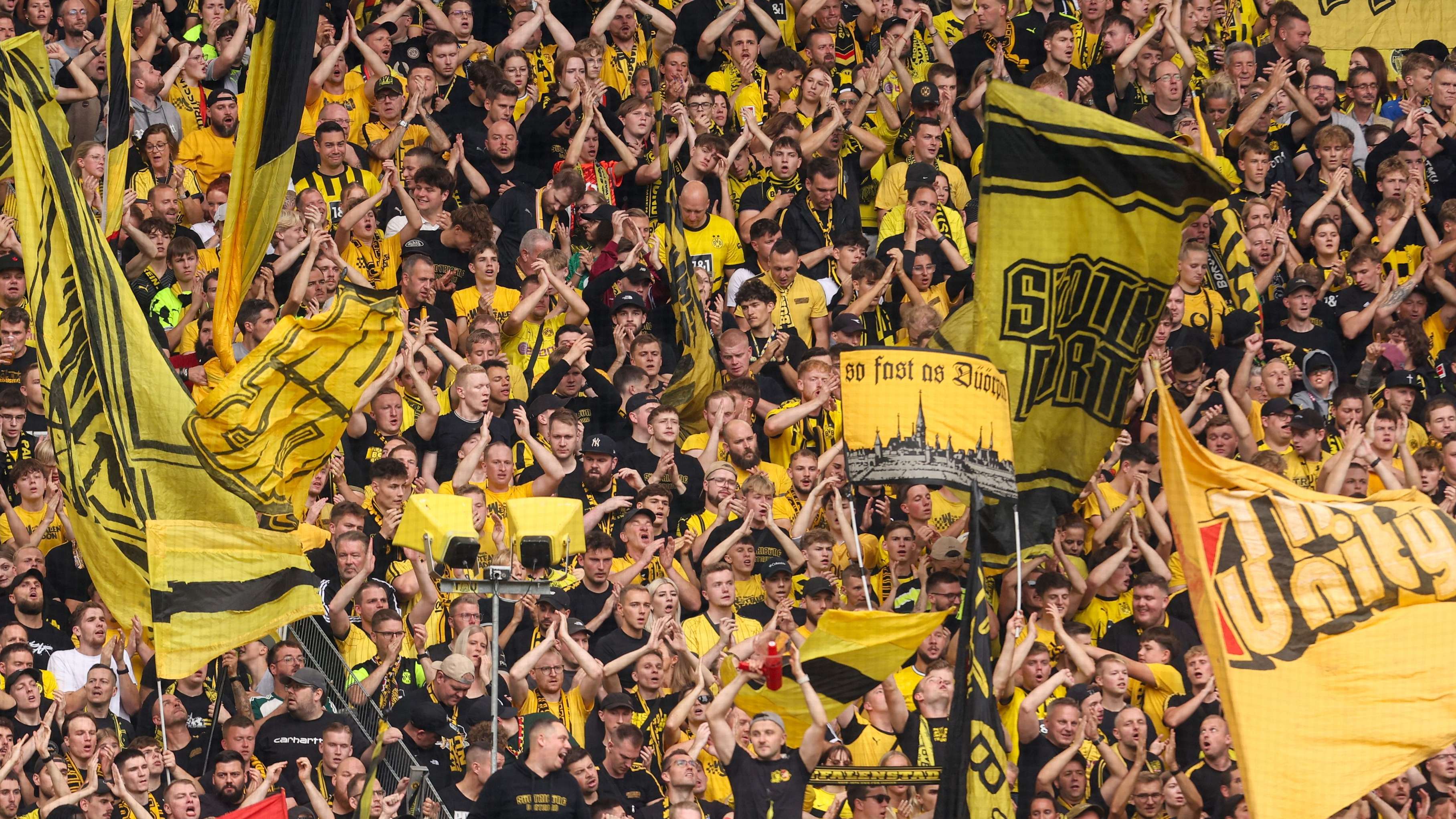
Dortmund is renowned for its passionate support, especially the famous Yellow Wall, the vast stand of standing supporters that has become one of European football’s most recognisable sights. The noise, movement and collective reaction of the crowd are central to the club’s identity. For many fans, the appeal of attending a match lies in being part of that atmosphere rather than viewing the game through a phone screen.
Heavy phone use can also change how supporters experience key moments. A fan concentrating on framing a video may miss the build-up to a chance, while livestreaming can distract people nearby. Even when filming is permitted, a sea of raised phones may make a stadium feel less connected than a crowd reacting together in real time. Dortmund’s points-based system offers a light-touch way to address those concerns without introducing a blanket ban.
The club’s plan also taps into a familiar feature of football culture: competition. Rather than simply telling supporters to put their phones away, the app gives them a measurable target and a chance to win something. That could make the idea more appealing to younger fans and app users, although its success will depend on whether supporters see the rewards as fun rather than as pressure to behave in a particular way.
Niko Kovac’s view: focus matters beyond the stands
Dortmund head coach Niko Kovac has also spoken about phone use, though his comments focused on the players rather than the crowd. Kovac said the squad does not use phones during its shared pre-match meal, helping the group concentrate and spend time together before a game.
He is less concerned about players using phones or wearing headphones in the dressing room or on the team bus. In his view, professional footballers are mature enough to understand how they need to prepare. The difference, Kovac suggested, is that players should be trusted to manage their own routines while recognising when focus and team connection are important.
His broader message was one of moderation. Kovac observed that people could benefit from spending less time on their phones and giving more attention to other things. That comment resonates beyond football: stadiums are one of the few places where thousands of people can share an event in person, yet digital habits can make it easy to remain partly distracted.
What the phone-use experiment could mean for future matches
Dortmund’s app feature is not a prediction that phones will disappear from football grounds. Instead, it offers a small experiment in how clubs might influence matchday behaviour without enforcing strict rules. If supporters respond positively, similar rewards-based systems could emerge elsewhere, perhaps with clubs testing different incentives or expanding the idea to other events.
For now, the initiative places the choice firmly with fans. Supporters can keep using their devices, join fan mode, or simply make a personal effort to watch more of the match directly. The central question is not whether phones belong in stadiums, but how they can be used without taking attention away from the football and the people gathered to watch it.
As Dortmund prepares to welcome Frankfurt, the club will be watching more than the scoreline. The response to fan mode may offer an early indication of whether prizes and a little friendly rivalry can help preserve the atmosphere that makes live football special.