
Olivier Giroud Explains Why He Left Arsenal Before France’s 2018 World Cup Triumph
Olivier Giroud has revealed that his January 2018 departure from Arsenal was driven by a clear career priority: he needed regular football to secure his place in France’s squad for the World Cup. The striker says leaving a club he loved was painful, but the decision proved pivotal as France went on to win the tournament in Russia.
Giroud moved from Arsenal to Chelsea midway through the 2017–18 season, joining one of the Gunners’ London and Premier League rivals. The transfer ended a productive spell in north London, where he had arrived from Montpellier in 2012 under manager Arsène Wenger. Across 253 appearances, he scored 105 goals and became a dependable presence at the centre of Arsenal’s attack.
His reflections have renewed interest in a career shaped by difficult choices, changing roles and major honours. They also offer a reminder that football transfers are not always simply about money or ambition: for international players, playing time in the months before a major tournament can determine whether they reach the biggest stage at all.
A Difficult Arsenal Exit With a World Cup in View
Giroud said he felt he had to leave Arsenal if he wanted to be part of France’s plans for the 2018 World Cup. With competition for places in the national team intense, remaining in north London without the role he wanted could have put his selection at risk. A move to Chelsea offered the prospect of a fresh opportunity and more consistent involvement.
“I had to leave the club in order to take part in the 2018 World Cup,” Giroud explained, reflecting on the choice. He described the departure as extremely sad and difficult, but also necessary for the next stage of his career. The outcome made the gamble especially significant: Giroud was selected for France and helped the national side lift the World Cup trophy.
That success does not erase the emotional cost of leaving Arsenal. Giroud had built strong relationships with his teammates and supporters, and he credited the club with helping him develop as a striker. His decision illustrates the delicate calculation players face when balancing loyalty to a club against the need to protect their place on the international stage.
How Wenger’s Training Helped Shape Giroud
Looking back on his Arsenal years, Giroud praised the daily work he did under Wenger. He said the training sessions helped sharpen the technical details of his game, including quick combinations, one-touch finishing and the movement needed to connect attacks. Those fundamentals helped him become more than a penalty-box target: he could also bring teammates into play and help Arsenal build forward.
Giroud’s physical presence made him a natural focal point, but his value to Wenger’s side also came from his ability to hold up the ball, lay it off and create space for runners. In a team that often sought to move the ball quickly through tight areas, his link-up play gave Arsenal another route into the final third. He described developing into a player his teammates could rely on when they needed an outlet or a platform for an attack.
Wenger’s football was known for its emphasis on fluent passing and movement, qualities Giroud said made his time at Arsenal enjoyable. His comments also underline how a striker’s contribution cannot always be measured by goals alone. Timing, first-touch control and intelligent passing can help sustain possession and create the conditions for others to score.
Giroud Sees Similarities in Arsenal’s Modern Style
Giroud also reflected on how the attacking game has changed. He noted that teams now often defend with compact lines and leave very little room inside the penalty area. For forwards, that means chances can be harder to find and must often be finished quickly, before defenders have time to close down the space.
Even so, he sees echoes of Wenger’s Arsenal in the current team’s approach. Giroud said he watches Arsenal regularly and recognises a continuing effort to raise the tempo in the final attacking third. The details may differ between generations, but the ambition to combine quickly, move defenders and create openings remains familiar.
His observations are particularly relevant to supporters assessing Arsenal’s attacking play. Against deep defensive blocks, speed of circulation and movement off the ball can be as important as individual skill. A team may dominate possession yet still need sharp combinations and precise finishing to turn control into goals. That tactical challenge remains central to modern football—and often shapes pre-match discussion, analysis and prediction.
A Return to North London at 40
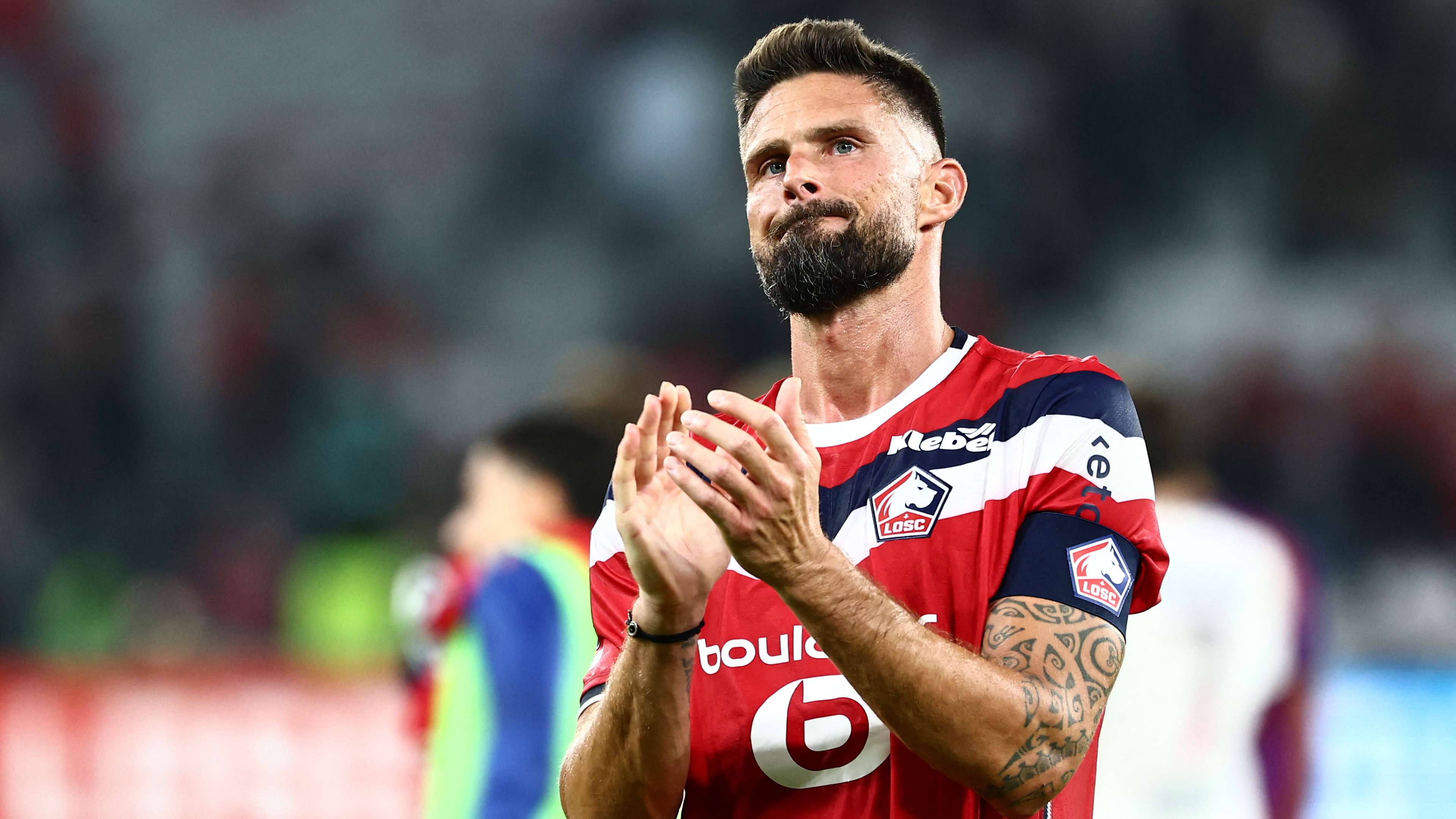
Giroud’s latest reflections come as he prepares to return to north London with Lille for a Champions League meeting against Arsenal. The fixture offers a striking full-circle moment: the former Gunners striker, now 40, is back in the city where he spent a major part of his career, this time representing a French club and facing Arsenal under Mikel Arteta.
The occasion carries both sporting and personal significance. Giroud’s Arsenal years established him as a familiar figure in English football, while his later career brought further major achievements, including the World Cup with France. A Champions League match against his former side gives supporters a chance to remember his contribution while seeing how his experience fits into Lille’s current campaign.
For Arsenal, the match is also an opportunity to test their approach against an opponent led by a striker who knows the club’s traditions and the demands of European competition. For Lille, Giroud’s experience and penalty-area instincts could prove valuable in a high-pressure fixture. Any football prediction will depend on form, tactics and team selection, but the emotional backdrop makes this encounter more than an ordinary European tie.
A Career Decision That Delivered Its Reward
Giroud’s explanation is ultimately a story about timing. Leaving Arsenal was not an easy choice, but he believed it was the right one to keep his World Cup hopes alive. France’s triumph in 2018 gave that decision a remarkable ending, while his warm comments about Wenger and Arsenal show that moving on did not diminish his appreciation for the club.
His journey also highlights the competing demands faced by elite players: earning minutes at club level, maintaining international form and making choices that can shape an entire season. Giroud left Arsenal with sadness, but he did so to keep moving forward—and returned years later with a World Cup winner’s medal and a lasting connection to north London.