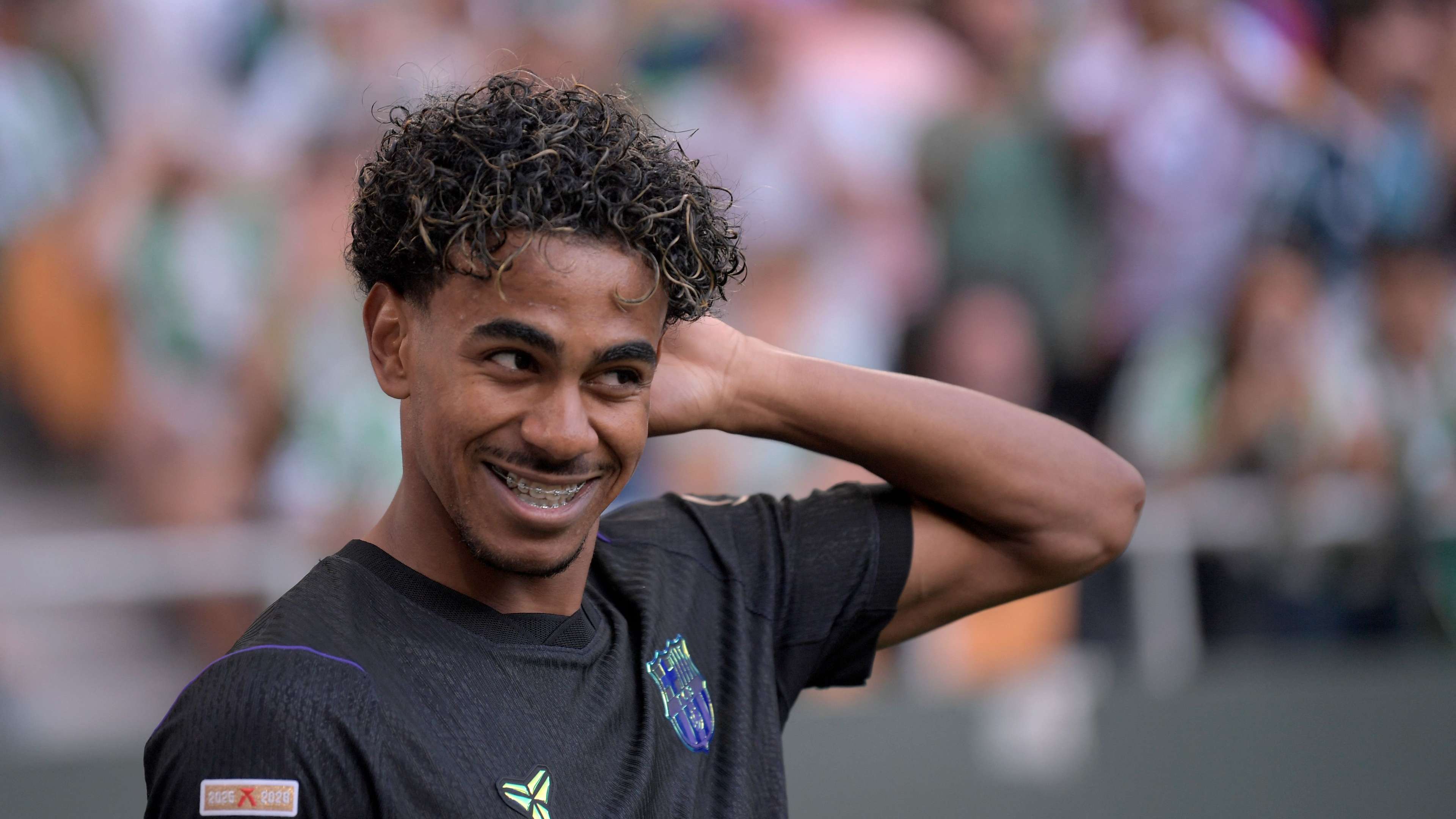
Frenkie de Jong opens up on Barcelona injury frustration and future role
Frenkie de Jong has addressed the criticism and uncertainty surrounding one of the most difficult periods of his Barcelona career, acknowledging why supporters were frustrated while insisting that he is now feeling ready to return to action. The Dutch midfielder also made clear that he is willing to help the team in different positions if required, even though he sees his natural home as the centre of midfield.
In comments reported from an interview with Ziggo Sport, De Jong reflected on how public debate about his performances often intensifies when he is unavailable. He said the pattern was familiar and that he understood why his absence had prompted questions from fans and commentators.
“Most of the criticism directed at me, or the fuss made about me, comes when I’m absent, when I can’t play football,” he said. “It has happened again this time too, and I fully understand the reasons for that.”
Why Barcelona fans were frustrated by his absence
One source of disappointment among Barcelona supporters was the contrast between De Jong’s involvement with the Netherlands at the World Cup and his subsequent spell on the sidelines for his club. He played through the tournament to its final match, but then missed several months of football with injury.
De Jong said he could see how that sequence looked from the perspective of fans who wanted to watch him represent Barcelona. “They watch me play with the national team, and they don’t watch me with the team they support,” he explained.
He acknowledged that the timeline could be difficult to accept: “If we want to simplify it, the picture looks like this: I played in the World Cup until the final match, and then I was away from the pitch for three months. I fully understand that feeling.”
His comments offer a candid explanation rather than an attempt to dismiss the criticism. For a player expected to influence Barcelona’s build-up and control the tempo of matches, an extended absence naturally raises questions about availability, recovery and how quickly he can return to his best level.
Injury speculation added to the pressure
The midfielder also described the frustration of dealing with an injury that proved more serious than initially expected. As uncertainty grew, differing reports and speculation about his condition and treatment began circulating, adding another layer to an already difficult situation.
“I am the first to feel annoyed by this situation, alongside the club and the fans, because I want to play,” De Jong said. “But I couldn’t, and it turned out that the injury was more serious than we thought. And then all kinds of accounts start to spread, and many things happen.”
Injuries can be challenging for any footballer, but the pressure is particularly intense at a major club, where supporters closely follow team news and every update can prompt debate. A gap between early expectations and the actual recovery period can also create confusion, especially when a player is seen competing for their country before missing club matches.
De Jong’s explanation points to a straightforward reality: wanting to play does not guarantee that a player is medically ready to return. The priority is a safe recovery, even when that means missing important fixtures and facing scrutiny from outside the training ground.
De Jong says he feels ready for the Clasico
After weeks of recovery, De Jong struck a more positive tone ahead of the Clasico, saying that he felt in strong condition and was prepared to play. His availability could be significant for Barcelona, particularly in a high-pressure match where midfield control, composure under pressure and quick transitions can shape the outcome.
“I feel in very good shape, and I feel ready,” he said.
That confidence will be welcome news for Barcelona supporters, although selection remains the coach’s decision. A player returning from injury may need time to rebuild match sharpness, and the demands of a Clasico can be especially intense. De Jong’s readiness, therefore, gives the coaching staff an important option rather than guaranteeing a particular role or amount of playing time.
For fans considering a football prediction ahead of the fixture, his condition is one factor among many. Team selection, tactical balance, the form of other midfielders and the physical demands of the match will all influence how Barcelona approach the contest. De Jong’s return could provide added flexibility, but the wider performance of the team will remain decisive.
Competition is strong, but De Jong believes he has a place
De Jong also spoke about the competition for places in Barcelona’s squad, including the impact of Rodri’s arrival. Rather than describing the increased competition as a problem, he presented it as a challenge that could help raise the level of the group.
“The competition is extremely strong, but that makes it more interesting for me,” he said. “I think I have a place in the team too, and I feel capable of playing.”
Competition can give a squad more options across a demanding season, particularly when Barcelona are balancing domestic matches with European commitments. It can also push established players to maintain high standards, while giving the coach more ways to adjust the team’s shape according to the opponent.
De Jong made clear that he is willing to adapt if the team needs him elsewhere on the pitch. “If the coach or the team asks me to play in another position, I will always do that,” he said. However, he added that his identity as a footballer remains tied to midfield: “I think everyone knows that I’m a midfielder.”
That distinction reflects both his flexibility and his preference. De Jong can contribute wherever the team requires, but his strengths are most familiar in the middle of the pitch, where he can help progress possession, connect defence and attack, and support Barcelona’s control of the game.
The Champions League remains his biggest ambition
Despite the recent setbacks, De Jong’s long-term goals have not changed. He identified winning the Champions League as a major ambition still missing from his career, describing the trophy as both a dream and a personal wish.
“Winning the Champions League is something still missing from my career,” he said. “It’s a big goal, a dream, and a wish.”
For Barcelona, that ambition aligns with the club’s broader expectations. De Jong’s return to fitness, his willingness to compete for a place and his readiness to adapt could all matter as the season develops. The immediate focus is on getting back onto the pitch and contributing consistently; the larger objective is helping Barcelona challenge for the biggest honours in European football.
His remarks combine an acknowledgement of supporters’ frustration with a clear message about his commitment. De Jong understands why his absence became a talking point, but he is now looking forward rather than dwelling on the controversy. If he can stay fit and regain rhythm, Barcelona will have another experienced midfielder available as they pursue their domestic targets and the Champions League dream.