
VAR Audio Reveals Heated Barcelona Protest Over Cucho Hernández Handball
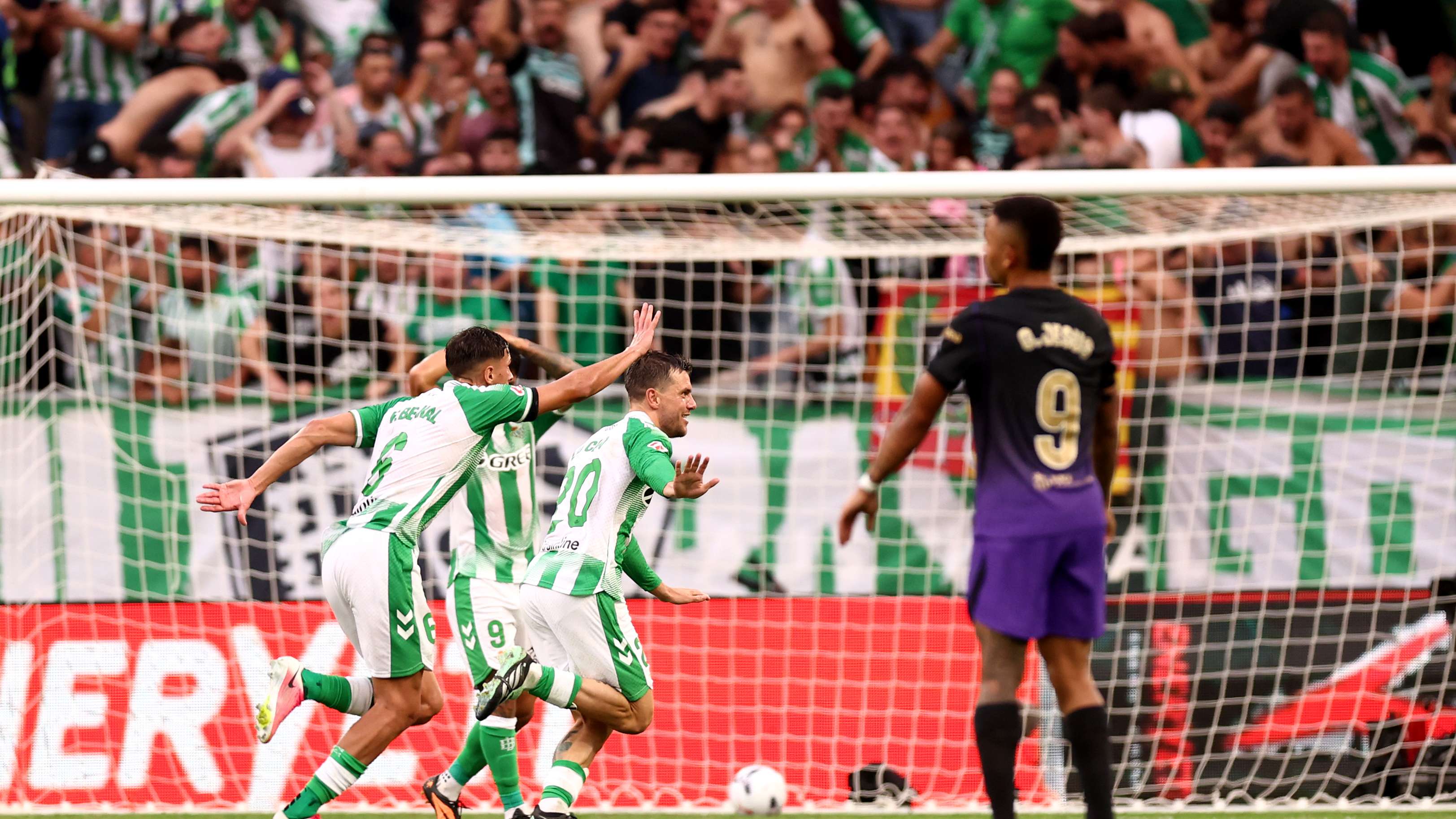
Pitchside audio has offered a revealing account of the dispute that unfolded during Barcelona’s 5-2 victory over Real Betis, after referee Ricardo de Burgos Bengoetxea reviewed a handball by Cucho Hernández. The incident led to Giovani Lo Celso’s goal being disallowed and exposed the contrasting views of Barcelona captain Pedri, the referee and Betis captain Héctor Bellerín.
According to Spanish newspaper Sport, the recording captures Barcelona players repeatedly arguing that Hernández had deliberately used his hand to control the ball during the build-up. De Burgos Bengoetxea, however, initially believed the contact did not meet the threshold for a foul. The eventual decision came only after the referee asked the video assistant referee (VAR) to examine the wider sequence.
The exchange highlights a familiar source of debate in modern football: how officials distinguish an accidental handball from an offence, particularly when the contact occurs several actions before a goal. It also shows how VAR reviews can hinge not just on whether the ball touches an arm, but on the player’s movement, the arm’s position and the development of the attack.
Pedri challenges the referee’s initial interpretation
The disagreement began when Pedri approached De Burgos Bengoetxea to protest. The midfielder was direct in his assessment, telling the referee that the handball was “completely clear.” The official responded that, in his view, Hernández’s movement did not warrant a foul.
Pedri immediately questioned that reasoning. He argued that Hernández had controlled the ball with his hand, making the contact significant rather than incidental. De Burgos Bengoetxea maintained that he did not see an offence, but said he would review the incident after a request from the VAR official, referred to in the audio as Siro.
The referee asked Pedri to speak with him individually as the discussion continued. The Barcelona captain repeated his claim that the handball was obvious, while Betis player Valentín Gómez rejected the accusation. Pedri then tried to demonstrate why he believed the contact had helped Hernández control the ball.
More Barcelona players joined the protest. Lamine Yamal added his voice, while Rodri also insisted that Hernández had used his hand to bring the ball under control. Fermín López described the incident as clear, and Pedri continued to challenge the referee’s explanation that the arm had been in a natural position.
That detail is central to many handball decisions. Under the Laws of the Game, contact with the arm is not automatically a foul. Officials must consider whether a player deliberately moved the arm towards the ball, whether the arm made the body unnaturally bigger, and what effect the contact had on the play. In this case, Barcelona’s argument focused on control: the players believed Hernández’s hand had helped him keep possession before the attack produced a goal.
Bellerín defends Betis as VAR examines the sequence
As the debate grew, Héctor Bellerín stepped in on behalf of Real Betis. The former Barcelona defender, serving as Betis captain on the pitch, defended the goal and urged the officials to consider the attacking move as a whole. He argued that the goal should stand “for football,” while the referee explained that the review would cover both the handball and the events leading to Lo Celso’s finish.
De Burgos Bengoetxea continued to say that he had not initially seen a handball worthy of punishment. He also told Bellerín that he would communicate any change if VAR identified an offence. The referee’s comments underline the distinction between his first impression and the final ruling: the on-field official had doubts, but was prepared to reassess the incident using the available footage.
The key question during the review was not limited to the moment when the ball touched Hernández. De Burgos Bengoetxea asked VAR to guide him through the full passage of play, noting that the ball had taken a deflection and asking whether that created a separate phase of play. That consideration mattered because the officials needed to determine how the handball related to the later shot and whether the goal followed directly from the infringement.
After reviewing the sequence, the referee ruled that Hernández’s handball had occurred during the attacking move and disallowed Lo Celso’s goal. The decision brought the argument to an end, although the audio makes clear that the referee’s initial interpretation had been different from the conclusion reached after the review.
What the decision means for Barcelona and Betis
Barcelona ultimately secured a 5-2 win, so the overturned goal did not change the result. Even so, the incident offers useful context for supporters assessing the match and the role of VAR. A decision can be decisive in the moment, affecting the scoreline and the emotional temperature on the pitch, even when the winning team later builds a comfortable margin.
For Barcelona, Pedri’s intervention reflected the responsibility often placed on a captain: to communicate the team’s view while officials are managing a contentious situation. For Betis, Bellerín’s defence showed the other side of that exchange, with the captain seeking to protect his team’s goal and keep the focus on the referee’s review.
The episode also illustrates why handball calls remain difficult to predict. Fans looking for a football prediction or match analysis should be cautious about treating any single handball incident as an automatic ruling. The outcome can depend on the exact angle of contact, the player’s body shape, the referee’s view and whether VAR identifies a direct link between the offence and a goal.
A reminder of VAR’s wider role
Rather than simply checking whether contact occurred, VAR must help officials assess the context and consequence of an incident. In the Betis match, the referee’s questions about a deflection and a possible second phase show how detailed that process can become. The final call was based on the complete attacking sequence, not solely on the first impression expressed during the on-field argument.
With the audio now public, supporters can hear how strongly Barcelona’s players believed the goal should be ruled out—and how firmly the referee initially disagreed. The review ultimately changed his decision, disallowing Lo Celso’s strike for Hernández’s handball. It was one of the match’s most debated moments, and a clear example of how communication, interpretation and technology can combine to shape a major football decision.