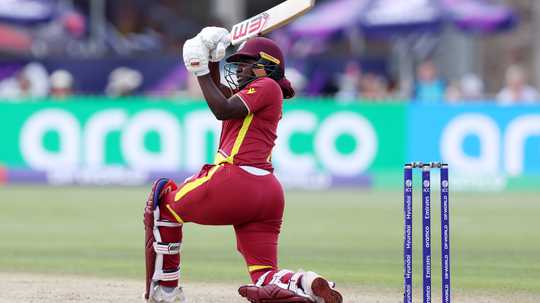

West Indies Clinch Series Sweep with Dominant 8-Wicket Victory Over Zimbabwe in Thrilling T20I Finale
The West Indies women’s cricket team showcased their formidable prowess in the shortest format of the game as they completed a comprehensive 3-0 sweep against Zimbabwe in the concluding match of the T20 International (T20I) series held in Harare. The final game was a tale of resilience, strategic brilliance, and individual brilliance, culminating in an exhilarating chase that kept fans on the edge of their seats. This series not only reaffirmed the West Indies’ dominance in women’s cricket but also provided plenty of insights into the evolving dynamics of T20 cricket, especially regarding prediction strategies and team performances.
Zimbabwe Sets a Competitive Target with a Standout Innings from Kelis Ndhlovu
Zimbabwe, having suffered heavy defeats in the first two fixtures, entered the decisive third match with renewed determination and a tactical approach that aimed to challenge the West Indies’ formidable bowling attack. Opting to bat first after winning the toss, Zimbabwe posted their highest total of the series — 142 for 6 in 20 overs — thanks largely to a resilient and aggressive innings from Kelis Ndhlovu. Her valiant effort of 65 runs off 48 balls, featuring six fours and three sixes, was the backbone of Zimbabwe’s innings and a crucial factor in setting a defendable total.
Ndhlovu’s innings was marked by a combination of tactical shot selection and calm execution under pressure. She shared key partnerships with Beloved Biza and Chiedza Dhururu, adding 27 runs early on and then a steady 39-run stand with Dhururu. Zimbabwe’s innings saw moments of hope, especially with Ndhlovu’s power-hitting, but it was also characterized by slow progress, as the team scored at exactly a run-a-ball during certain phases, which put pressure on their middle and lower order.
Zimbabwe’s middle order attempted to accelerate in the final overs, adding 49 runs in the last five overs, thanks to some late hits from Christine Mutasa and Michelle Mavunga. Mutasa’s unbeaten 24 off 19 balls helped Zimbabwe finish on a competitive total, setting the stage for an exciting chase.
West Indies’ Strategic Batting and Stellar Bowling Performance Lead to Decisive Victory
The West Indies’ response to Zimbabwe’s target was a masterclass in calculated batting and disciplined bowling. Opening the batting, Realeanna Grimmond and Stafanie Taylor laid a solid foundation, reaching 43 runs in the powerplay, which set a positive tone for the chase. The loss of Grimmond for 17 in the third over was a minor setback, but Jahzara Claxton and Taylor steadied the innings, forming a crucial partnership of 71 runs off 56 balls.
Claxton’s composed 38 off 37 balls kept the required run rate manageable, but her dismissal in the 12th over, caught by Biza, marked a brief lull for West Indies. At that moment, the target seemed within reach but not yet a foregone conclusion. However, Taylor’s exceptional batting under pressure turned the tide decisively. Her unbeaten 64 off 39 balls, including 11 fours, was a display of power, precision, and strategic shot selection, cementing her role as the series’ standout performer.
Jannillea Glasgow provided valuable support, finishing unbeaten on 15 off 15 balls, and together with Taylor, added an unbroken 53-run stand that sealed the victory in the 17th over. The West Indies team displayed remarkable composure, confidence, and tactical acumen throughout the chase, exemplifying the importance of prediction and planning in T20 cricket—where every ball counts and strategic foresight can turn the tide.
Key Takeaways and Insights from the Series for Cricket Prediction and Future Strategies
The series highlighted several critical aspects relevant to cricket enthusiasts, analysts, and coaches interested in prediction models and game strategy. Firstly, Zimbabwe’s decision to set a competitive target after their strong start demonstrated an understanding of the unpredictability inherent in T20 cricket. Their ability to adapt and execute under pressure provided valuable insights into how teams can improve their prediction accuracy regarding scoring potential and bowling effectiveness.
On the other hand, West Indies showcased how experienced players like Stafanie Taylor utilize their skills to adapt to different match situations. Taylor’s unbeaten innings was a perfect example of how predicting the shifting momentum and adjusting batting strategies accordingly can lead to success. This match underscored the importance of analyzing player form, pitch conditions, and previous performances to make accurate predictions about match outcomes.
Furthermore, the series emphasized the significance of bowling performances, especially from bowlers like Ndhlovu and Taylor, who effectively contained the opposition and created crucial breakthroughs. The ability to predict which bowlers will excel under specific conditions is vital for teams looking to optimize their chances of victory in T20 cricket, where wickets can fall unexpectedly, and momentum swings are frequent.
Looking Ahead: The Growing Influence of Data and Prediction Models in Women’s Cricket
The thrilling conclusion of this series reaffirmed the growing importance of data analytics, predictive modeling, and strategic planning in women’s cricket. As the sport continues to expand globally, teams and analysts increasingly rely on advanced prediction tools to assess player performances, pitch behavior, and match scenarios.
Experts suggest that integrating real-time data and machine learning algorithms can enhance decision-making, from batting order adjustments to bowling changes. For example, predicting the potential of a player like Ndhlovu to accelerate in the final overs or estimating the risk of losing wickets at certain stages can inform tactical choices and improve match outcomes.
Moreover, audiences and fans are increasingly interested in understanding the probabilities and prediction models behind match results. This shift is transforming cricket viewing into a more analytical and engaging experience, especially in T20 leagues where every ball can alter the game’s course.
Conclusion: A Series of Lessons for Future T20 Cricket Predictions
The West Indies’ commanding victory in Harare not only underscored their cricketing prowess but also provided valuable lessons in prediction, strategic planning, and player execution. As women’s cricket continues to grow in stature, the integration of advanced analytics and prediction strategies will play an essential role in shaping future outcomes and elevating the sport’s competitive level.
Looking forward, teams worldwide will likely invest more in data-driven approaches to enhance their performance and prediction accuracy. For fans and analysts alike, this series was a reminder that in cricket, like in all sports, success often hinges on understanding the nuances, reading the game, and making informed predictions—elements that make T20 cricket so unpredictable, exciting, and constantly evolving.
Brief Scores Summary
Zimbabwe: 142/6 in 20 overs (Kelis Ndhlovu 65; Stafanie Taylor 2-8)
West Indies: 143/2 in 17 overs (Stafanie Taylor 64*; Christine Mutasa 1-19)
Result: West Indies won by 8 wickets, completing a series sweep with an impressive performance that reflects their rising dominance in women’s cricket and the predictive mastery involved in their strategic gameplay.