
Al-Hilal vs Al-Ittihad: Lone Holding Midfielders Set Up a High-Risk Saudi Clasico
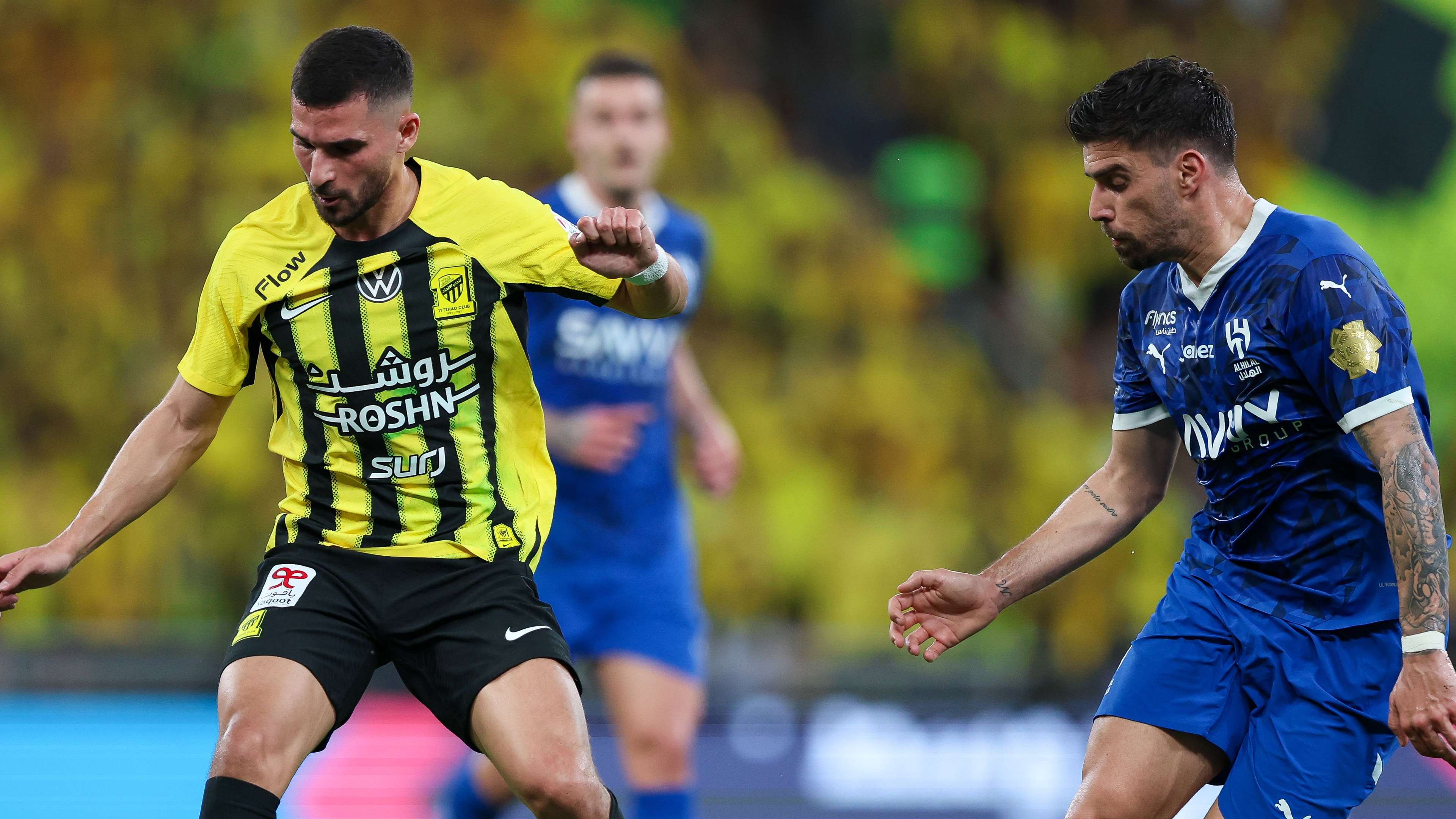
Al-Hilal and Al-Ittihad are preparing for a Saudi Roshn League showdown shaped by an ambitious tactical gamble. For Saturday evening’s eighth-round clasico, both coaches have opted to use just one specialist holding midfielder, prioritising attacking numbers while placing a heavy defensive burden on the player stationed in front of the back line.
Ruben Neves will occupy that role for Al-Hilal, while Dion Lopy is expected to anchor Al-Ittihad’s midfield. The decision could help either side dominate possession, press higher and create more options near goal. But it also leaves potentially vulnerable spaces between midfield and defence—areas that opponents with pace and intelligent movement will look to exploit.
That tension makes the midfield contest central to any football prediction for the match. If the supporting midfielders recover quickly and keep their shape, the single-pivot system could give their team an attacking edge. If they are caught too far forward, one well-timed pass may bypass the midfield and expose the defence.
Why Both Coaches Are Taking the Risk
A lone holding midfielder can bring clear benefits. With fewer players assigned to defensive duties, more teammates can move into advanced positions, support the forwards and offer passing options during build-up. The formation may also help a team press aggressively, with midfielders able to close down opponents higher up the pitch instead of sitting deep.
That approach carries a cost. The holding midfielder must read danger, cover passing lanes and protect the central space while also helping the team move the ball forward. When possession is lost, that player may be left facing several opponents without enough support. A quick counterattack can turn a promising attacking move into an immediate defensive emergency.
The danger is especially pronounced against teams whose forwards drift into pockets between the lines. If an attacker pulls a centre-back out of position or receives the ball behind the midfield, the defending side may be forced to retreat rapidly. For Neves and Lopy, positioning and communication could matter just as much as tackling.
Al-Hilal’s attacking options
Al-Hilal’s starting XI features Yassine Bounou in goal, with Mohammed Mahzari, Hassan Tambakti, Kalidou Koulibaly and Theo Hernandez forming the defence. Neves is positioned at the base of midfield, flanked by Nasser Al-Dawsari and Simon Bouabre. Gabriel Martinelli, Somerville and Ollie Watkins are named in the attacking line.
The selection suggests that Al-Hilal want to combine a strong defensive foundation with pace and movement in forward areas. Hernandez can offer an outlet from the left, while Martinelli and Watkins provide options to attack space. If Al-Hilal can move the ball quickly through midfield, their forwards may be able to test Al-Ittihad’s defensive line before it settles.
Neves, however, will be key to keeping that attacking ambition balanced. He must help Al-Hilal progress possession without allowing the centre of the pitch to become exposed. Al-Dawsari and Bouabre will be expected to support him when the opposition has the ball, particularly if the full-backs advance.
Al-Ittihad’s response and counterattacking threat
Al-Ittihad have selected Predrag Rajkovic in goal, protected by Fares Abidi, Danilo Pereira, Carlo Simic and Muhannad Al-Shanqeeti. Lopy anchors the midfield behind Ahmed Al-Ghamdi and Houssem Aouar, while Steven Bergwijn, Youssef En-Nesyri and Marwan Al-Sahafi lead the attack.
The front three give Al-Ittihad different ways to threaten. Bergwijn can carry the ball and attack from wide areas, En-Nesyri offers a focal point in the centre, and Al-Sahafi can provide movement around the forward line. Their ability to exploit space quickly could be especially important if Al-Hilal’s midfielders push high and leave room to counter.
Aouar and Al-Ghamdi also have a significant two-way assignment. They can help Al-Ittihad create chances and support the forwards, but they must be ready to track back whenever possession changes. If Lopy is left isolated, Al-Hilal’s attacking midfielders could find room to receive the ball and turn towards goal.
The tactical battles that could decide the clasico
The first major test may come during transitions. Both teams will need to react immediately after losing the ball: the nearest players must press the ball carrier, while the rest recover into compact positions. A slow response could leave the lone holding midfielder outnumbered and give the opposition a direct route towards goal.
Wide areas may also prove decisive. If either side’s full-backs join the attack, the opposing forwards can target the space they leave behind. That would force the holding midfielder to shift across and protect the flank, potentially opening a channel through the centre. The team that covers those movements most effectively may gain control without needing to dominate possession.
Set pieces and second balls could offer another route to an advantage. In an open match, clearances may fall to midfielders positioned around the edge of the area. Winning those loose balls would allow a team to sustain pressure; losing them could quickly invite another attack.
Prediction: midfield discipline could outweigh attacking firepower
With both sides committing numbers forward, the clasico has the ingredients for an open, entertaining contest. Al-Hilal’s pace and movement could trouble Al-Ittihad, while Al-Ittihad’s forward line may be well placed to punish any gaps left during the hosts’ attacks. The outcome may depend less on which team has the more adventurous formation and more on which supporting midfielders recover and defend with greater discipline.
In this Al-Hilal vs Al-Ittihad prediction, the lone holding midfielders are likely to shape the game’s rhythm. Neves and Lopy will need to protect the space in front of their defences while remaining composed in possession. If either team can isolate its opponent’s pivot, the resulting openings could decide the match.
Inzaghi’s attacking approach and Toornstra’s desire to maintain Al-Ittihad’s momentum set up a compelling tactical duel. The single-pivot gamble could deliver control and extra firepower—or become the weakness that turns one lost ball into a decisive chance. In a rivalry this intense, the side that manages that risk best may leave with the advantage.