
India Clinches Historic Cricket Gold at the 2026 Asian Games: A Thrilling Showdown Against Pakistan
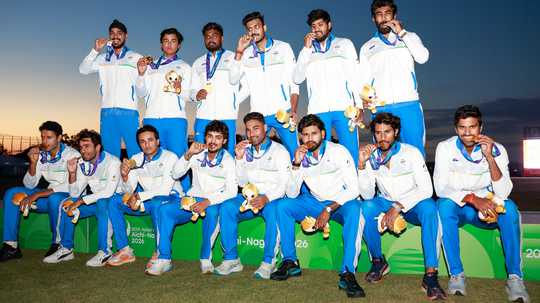
The 2026 Asian Games delivered a spectacular cricket final that had fans on the edge of their seats, as India secured their second consecutive gold medal in men’s cricket with a hard-fought victory over arch-rivals Pakistan. The intense contest, marked by remarkable performances and strategic masterstrokes, culminated in India winning by 19 runs, reaffirming their dominance in the sport within the continental arena. This match not only showcased top-tier talent but also provided crucial insights into team strategies, player predictions, and the evolving landscape of cricket on the Asian stage.
Setting the Stage: A Riveting Battle Begins
The final was set against the backdrop of a surface that appeared to favor spin bowling, yet the teams’ approaches defied expectations. India won the toss and elected to bat first—a decision that proved pivotal. Their innings was characterized by aggressive batting, exceptional shot-making, and strategic partnerships, which ultimately set a formidable target for Pakistan to chase.
India’s Explosive Start and Strategic Batting
India’s innings was ignited by Abhishek Sharma, whose quickfire fifty laid the groundwork for a commanding total. Sharma’s aggressive approach, including a rapid 20-ball fifty, was a testament to his prowess and confidence. His ability to capitalize on loose deliveries and exploit the early Powerplay set the tone for the innings. Alongside Sharma, Tilak Varma and Shivam Dube contributed with crucial cameos, reminiscent of their heroics from last year’s Asia Cup final.
The Indian team’s decision to open aggressively paid dividends, as they amassed 81 runs in the Powerplay—a period typically challenging on a surface that favored spin. Their calculated risk-taking was evident in their scoring rate, which kept Pakistan on the back foot right from the outset. The Indian batters demonstrated adaptability, with Sharma surviving a dropped catch and a run-out chance, only to continue his onslaught and reach a 20-ball fifty, a feat that electrified the stadium.
Pakistan’s Bowling Strategy and Its Challenges
Pakistan’s bowling tactics faced early setbacks, notably their decision to bowl leg-spinner Saad Masood in the second over, which backfired spectacularly. The over turned into a nightmare as it yielded 24 runs, with India’s batters, especially Vaibhav Sooryavanshi and Abhishek Sharma, dismantling Masood’s line and length. This early onslaught underscored the importance of strategic planning in cricket prediction analyses, highlighting how misjudged tactics can prove costly in high-stakes matches.
Pakistan’s bowlers struggled to contain the Indian batters, who exploited every mistake. Despite attempts to tighten their lines with spinners like Arafat Minhas, the Indian scoring kept pace, and the team reached 50 runs in just 3.2 overs. The middle overs saw some resistance from the Pakistani bowlers, but the damage was done early, and India’s aggressive batting kept the momentum alive.
Middle Overs and the Turning Point
As India’s score climbed past 100, Pakistan’s bowlers sought to tighten the screws. Shreyas Iyer and Ishan Kishan attempted to consolidate, but Pakistan’s spin attack found some control, leading to a phase where India went 34 balls without a boundary—a period that tested their nerve and patience. However, Tilak Varma’s timely intervention in the 17th over reignited the scoring spree, followed by Dube’s powerful hitting, which included successive sixes that lifted the total past 200.
The partnership between Sharma and Varma was a masterclass in building a competitive total, with Sharma’s aggressive stroke play complemented by Varma’s calm and calculated approach. Dube’s cameo, including a boundary-laden 27, was vital in pushing India’s total to 211/6 in their allotted 20 overs. Their final tally was a reflection of resilience and calculated risk-taking, essential elements in cricket prediction models for successful teams.
Pakistan’s Chase: A Tale of Resilience and Frustration
Pakistan’s response was marked by Hasan Nawaz’s spectacular knock—an exhilarating 96 that kept the match alive deep into the innings. Nawaz’s innings was characterized by power-hitting and intelligent shot selection, with notable boundaries and sixes that kept Pakistan within striking distance. His effort, however, was a lone wolf in a team effort that ultimately fell short.
Pakistan’s chase was hampered by early wickets and disciplined bowling from India’s bowlers. Jasprit Bumrah, known for his ability to extract extra lift and pace, posed constant threats, while Axar Patel and Washington Sundar tightened the screws in the Powerplay, restricting Pakistan to 39/2. Their strategic bowling, combined with sharp fielding, created mounting pressure on the Pakistani batsmen.
The game’s turning point came when Nawaz and Saim Ayub steadied the innings with an 87-run partnership, keeping Pakistan’s hopes alive. Nawaz, given a reprieve due to a missed catch, responded with aggressive hitting, including a vital six off Bishnoi and boundaries that kept Pakistan in the hunt. As wickets fell late in the innings, Pakistan’s chase faltered, and despite Nawaz’s valiant effort, they fell short by 19 runs.
Key Moments and Impactful Performances
Strategic cricket predictions often hinge on key performances, and this match was no exception. Abhishek Sharma’s rapid fifty and Tilak Varma’s calm finish were pivotal, demonstrating the importance of stable, high-impact innings in cricket predictions. On the bowling front, Jasprit Bumrah’s yorkers in the death overs showcased his reputation as a death-over specialist, while Washington Sundar and Axar Patel’s wickets underscored the value of spin bowling in limiting runs and creating pressure.
Pakistan’s Hasan Nawaz emerged as the standout batter, with his aggressive approach providing a glimpse into the future of cricket prediction—where individual brilliance can sometimes elevate the team. His near-miss for the highest score of the tournament highlights the thin margins that often decide cricket matches at the highest levels.
Looking Ahead: What This Means for Cricket Prediction and Future Tournaments
This gripping final not only reinforced India’s supremacy in Asian cricket but also offered valuable lessons for cricket prediction enthusiasts and analysts. The match demonstrated how strategic decisions, player form, and on-field adaptability can influence outcomes—factors that are central to accurate predictions in cricket betting and analysis.
Moreover, the performance of emerging players like Abhishek Sharma and Tilak Varma signals a bright future for Indian cricket, emphasizing the importance of youth development and talent scouting in shaping competitive teams. Pakistan, on the other hand, showcased resilience, underscoring that even in defeat, individual brilliance and strategic insights can offer hope for future tournaments.
Final Thoughts: A Historic Victory Enshrined in Asian Games Cricket Legacy
The 2026 Asian Games cricket final will be remembered as a classic example of high-stakes cricket, where strategy, skill, and mental toughness converged to create a spectacle. India’s victory by 19 runs not only cemented their status as Asian champions but also provided a blueprint for future teams aiming for cricket prediction success.
As fans and analysts await the next chapter in cricket’s evolving story, this match stands as a testament to the sport’s unpredictability and the thrill of competition. With emerging talents and tactical innovations, cricket continues to captivate audiences across Asia and beyond, promising more exciting contests in the years to come.
Final Score: India 211/6 in 20 overs, Pakistan 192/6 in 20 overs. India wins by 19 runs.