
An Open Letter Sparks Division in Asian Football Over FIFA President
An open letter criticizing FIFA President Gianni Infantino has ignited a public split within Asian football. The controversy has deepened as Qatar has rejected the Asian Football Confederation’s stance and demanded urgent clarification on who authorized the organization to speak on behalf of its members.
A Rift in Asian Football
The dispute has highlighted a clear divide within the Asian football community at a crucial juncture in the battle for the future of the FIFA presidency. Infantino, who is vying for re-election next year, is facing a rare rebellion led by three of the world’s largest continental confederations.
On Monday, the AFC, along with the European confederation UEFA and the North, Central American, and Caribbean confederation CONCACAF, jointly called for Infantino’s resignation. The catalyst for this unified front was the collapse of Infantino’s plan to attract private investment for FIFA’s tournaments, particularly the World Cup.
Qatar’s Strong Response
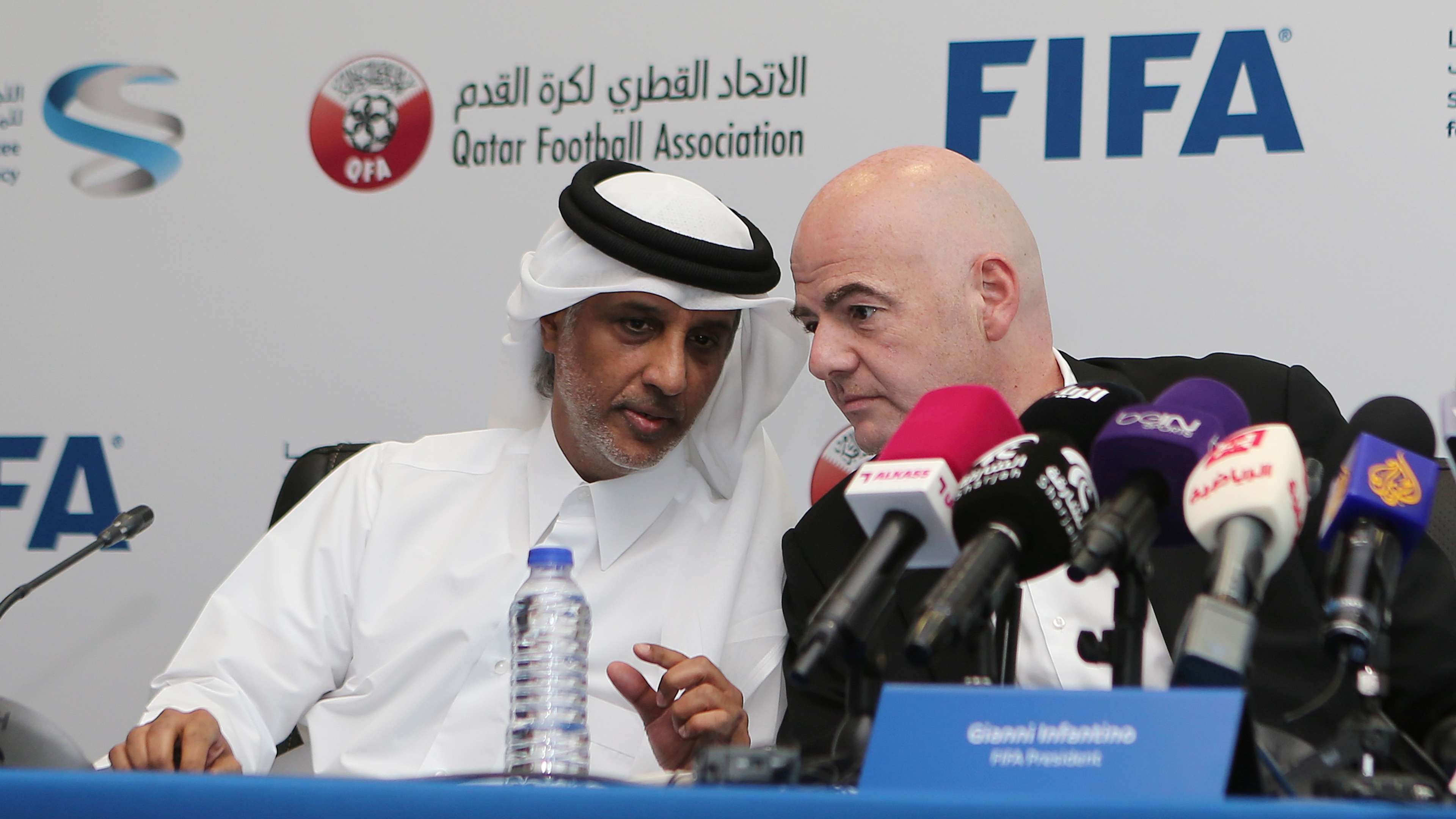
Hamad bin Khalifa Al Thani, President of the Qatar Football Association, a member of the AFC executive committee and the FIFA Council, released a strongly worded message directed at AFC President Sheikh Salman bin Ibrahim Al Khalifa. Al Thani’s message, published by Reuters, emphasized the need for transparency and consultation within the AFC.
Al Thani’s message stated, “First, the existence of a collective view must be verified. It cannot be assumed, nor can it be imposed by mere announcement.” He demanded to know the process of the consultations that led to the AFC’s statement and questioned the authority under which the organization spoke on behalf of its 47 member associations.
Expressing his disappointment, Al Thani noted, “I was not consulted, neither the Qatar Football Association nor myself personally, whether formally or informally, before the statement was issued.” The lack of prior notice or opportunity to provide input before the public release of the statement has raised concerns within the Asian football community.
Division and Support for Infantino
The rift within the AFC was further highlighted when six Arab football associations, including Qatar and Morocco, expressed their full support for Infantino amidst the turmoil caused by the failed private investment proposal. Notable FIFA Council members such as Al Thani of Qatar, Abo Rida of Egypt, Lekjaa of Morocco, and Ould Yahya of Mauritania backed Infantino in a joint statement.
The statement praised Infantino’s efforts to enhance football globally, increase opportunities for all regions, and strengthen the game’s role in fostering unity among nations and communities. Infantino’s proposal to commercialize the World Cup’s rights and sell a portion to private investors was met with strong opposition, leading to its withdrawal.
The controversy surrounding Infantino and the divisions within the AFC underscore the challenges and complexities facing the world of football governance. As the battle for the FIFA presidency intensifies, the future direction of the sport remains uncertain.
Impact of the Open Letter
The open letter criticizing FIFA President Gianni Infantino has caused a ripple effect in the world of Asian football, exposing underlying tensions and disagreements among key stakeholders. This public split within the AFC raises questions about the organization’s decision-making process and the level of transparency and consultation among its members.
Qatar’s strong response to the AFC’s statement reflects a broader concern within the Asian football community regarding the lack of consensus and communication on important matters. The demand for clarification from Qatar highlights the need for greater dialogue and inclusivity in decision-making processes to ensure that all member associations have a voice in shaping the future of football governance.
Political Dynamics and Allegiances
The division within the AFC also sheds light on the political dynamics and allegiances that play a significant role in shaping the landscape of international football. The support for Infantino from certain Arab football associations, including Qatar and Morocco, underscores the influence of regional alliances and shared interests in the FIFA presidency race.
While the joint statement backing Infantino highlights the efforts to portray a united front, it also reveals underlying tensions and differing perspectives within the AFC. The complexities of balancing individual interests with collective decision-making processes pose a challenge to achieving cohesion and solidarity within the Asian football community.
Future of FIFA Presidency
As the battle for the FIFA presidency intensifies, the divisions within the AFC and the broader football community raise concerns about the direction of the sport’s governance. The failed private investment proposal and the subsequent fallout have exposed vulnerabilities and disagreements that threaten to undermine the unity and credibility of FIFA and its leadership.
The controversy surrounding Infantino’s tenure and the challenges facing the world of football governance highlight the need for greater transparency, accountability, and collaboration among all stakeholders. The future of the FIFA presidency will depend on the ability to navigate these complex dynamics and rebuild trust and consensus within the global football community.
Conclusion
The rift within the AFC over the open letter criticizing FIFA President Gianni Infantino reflects a broader struggle for power and influence in the world of international football. The response from Qatar and other member associations underscores the need for greater transparency, consultation, and inclusivity in decision-making processes to ensure that all voices are heard and respected.
As the battle for the FIFA presidency unfolds, the divisions and alliances within the AFC will continue to shape the future of football governance and the direction of the sport on a global scale. It is crucial for all stakeholders to work together to find common ground, foster unity, and uphold the values of integrity and fairness in football administration.