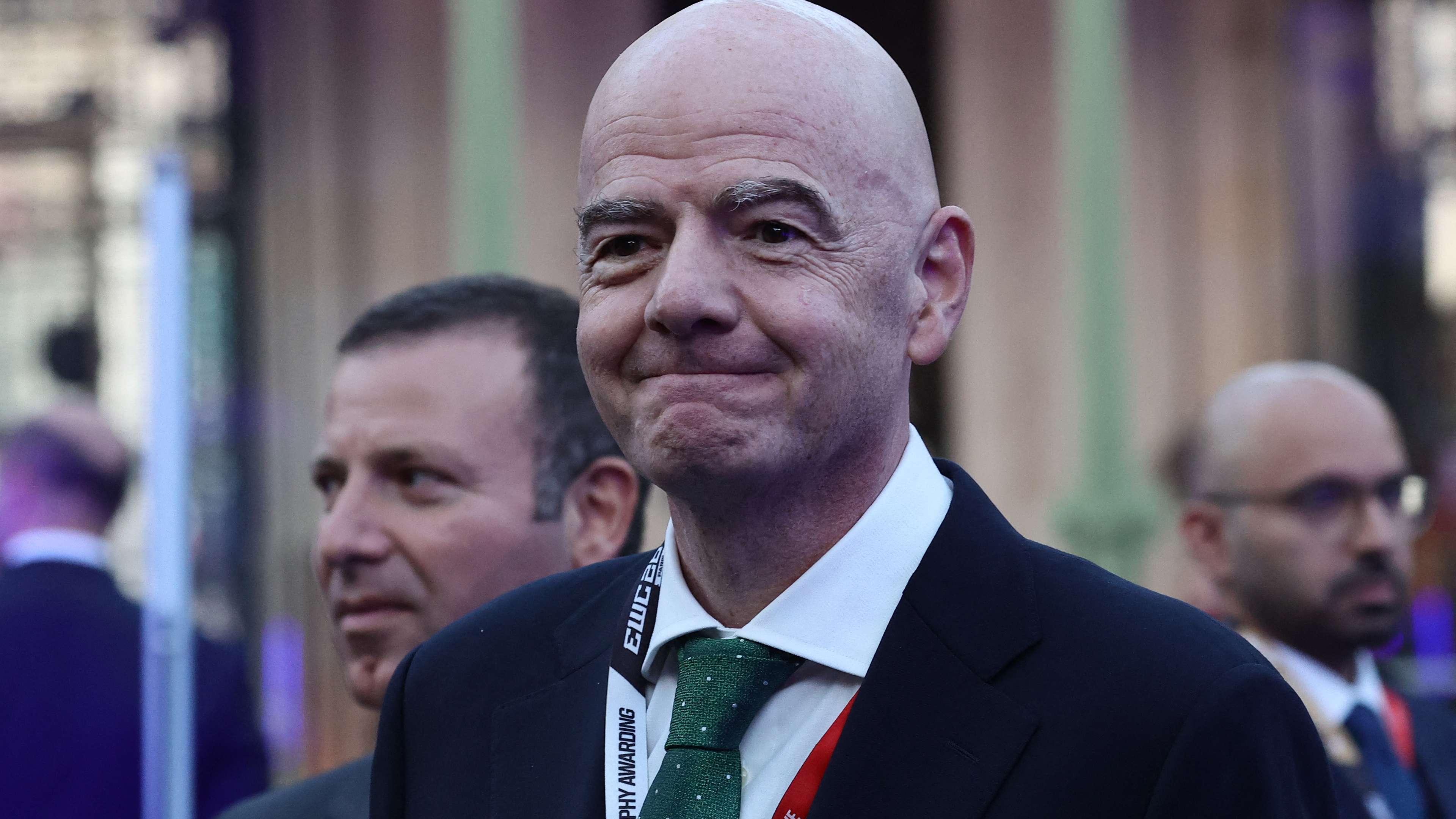

FIFA President Gianni Infantino Faces Fresh Questions Over Undisclosed Pay
FIFA president Gianni Infantino is facing renewed scrutiny after US tax filings reportedly revealed an additional payment of $1.76 million—about £1.3 million—from a company linked to the 2026 World Cup. The sum was paid in 2024 and appears to have been separate from the compensation disclosed in FIFA’s annual report, raising questions about transparency and the organisation’s rules on executive pay.
The disclosure has prompted a former FIFA governance official to describe the apparent omission as a potential breach of the governing body’s regulations. FIFA has not publicly confirmed that the payment violated its rules. The issue is nevertheless likely to intensify debate about accountability at football’s most powerful institution, particularly as it prepares to stage a World Cup across the United States, Canada and Mexico.
What the US filing reportedly shows
According to reporting by The Telegraph and The Times, filings submitted to the US Internal Revenue Service show that FWC2026 US Inc paid Infantino $1.76 million in 2024. The company was established in connection with preparations for the 2026 tournament in the United States.
FIFA’s annual report for the same year listed Infantino’s compensation at 4.27 million Swiss francs, equivalent to approximately £3.88 million at the time. The additional payment identified in the US filing was not included in that reported figure, according to the newspapers. The accounts reportedly classified $626,229 of the payment as “other reportable compensation”, in addition to salary and bonus-related amounts.
The distinction matters because FIFA’s financial reporting is intended to provide public information about how the organisation compensates its senior officials. Its statutes state that the individual compensation of the FIFA president must be made public. If payments from a FIFA-linked company are excluded from that disclosure, questions naturally arise over whether the published figure gives a complete account of the president’s remuneration.
Former governance chief calls for scrutiny
Miguel Maduro, who previously led FIFA’s governance committee, told The Times that payments made by companies connected to FIFA should be declared if they form part of an official’s compensation. He described an undisclosed payment of that kind as a “clear breach” of the rules and called for the matter to be investigated.
Maduro also stressed that FIFA’s regulations require full transparency. In his view, a compensation sub-committee should not be able to authorise alternative forms of remuneration that fall outside the organisation’s public reporting requirements. His comments focus attention on a central issue: whether the payment was properly assessed and disclosed under FIFA’s own framework, rather than simply on the size of the sum.
That question cannot be settled by the filing alone. A US tax document may identify money paid by a company, but further information would be needed to establish the payment’s purpose, how FIFA classified it and whether it was already covered by another disclosure. FIFA’s response and any supporting documentation will therefore be important in determining whether the reporting was complete.
Why a World Cup subsidiary is involved
Large international tournaments often require dedicated companies to handle local operations, contracts and financial administration. FWC2026 US Inc is linked to the US side of preparations for the 2026 World Cup, which will be the first edition hosted by three countries and the first to feature 48 teams.
That expanded format brings substantial logistical demands, from stadium operations and transport to commercial agreements and coordination among national organisers. The scale of the project makes clear financial controls especially important. When a tournament-related entity pays a senior FIFA official, the organisation’s reporting should explain the nature of that payment and how it fits with the official’s overall compensation.
For football supporters, the issue reaches beyond an accounting dispute. FIFA’s credibility depends partly on whether fans, players, national associations and public authorities can trust its governance. Transparent reporting helps demonstrate that decisions are made under consistent rules, particularly when the organisation oversees a tournament generating enormous global attention and commercial value.
Questions about further payments and lifestyle claims
A source who shared the accounts with The Times reportedly said Infantino received similar amounts—or possibly more—in 2025 and 2026. Those claims have not been established by the 2024 filing described in the reports, and they should be treated as allegations unless supported by further records. Any additional payments would need to be assessed separately, including whether they were disclosed and what services or responsibilities they covered.
The reports have also fuelled speculation about Infantino’s lifestyle in Miami, where he was said to have lived in a waterfront mansion at a substantial monthly cost before the World Cup. However, the reported payment does not by itself show how the money was spent. Linking compensation to personal expenditure without evidence would go beyond what the filing establishes.
The more consequential question is whether FIFA’s public accounts accurately captured all compensation paid to its president through connected entities. A clear explanation could help distinguish between a reporting error, a payment handled under a separate arrangement and a genuine failure to follow the organisation’s regulations.
What happens next for FIFA?
The controversy places pressure on FIFA to explain how the payment was authorised, whether it was included in any other compensation calculation and why it did not appear in the annual report figure cited for 2024. Independent review or a formal investigation could help establish the facts and determine whether any rules were breached.
For now, the available reporting raises questions rather than providing a final verdict. The US filing identifies a payment, while the former governance official argues that an undisclosed sum from a FIFA-linked company would conflict with the organisation’s transparency obligations. FIFA’s response will be central to resolving the disagreement.
As preparations continue for the 2026 football World Cup, scrutiny of the governing body is likely to remain intense. Fans looking for a tournament prediction may focus on the expanded field, host nations and leading contenders, but the event’s success will also depend on confidence in the institution organising it. Clear answers about executive compensation would help FIFA demonstrate that its rules apply consistently at the highest level.