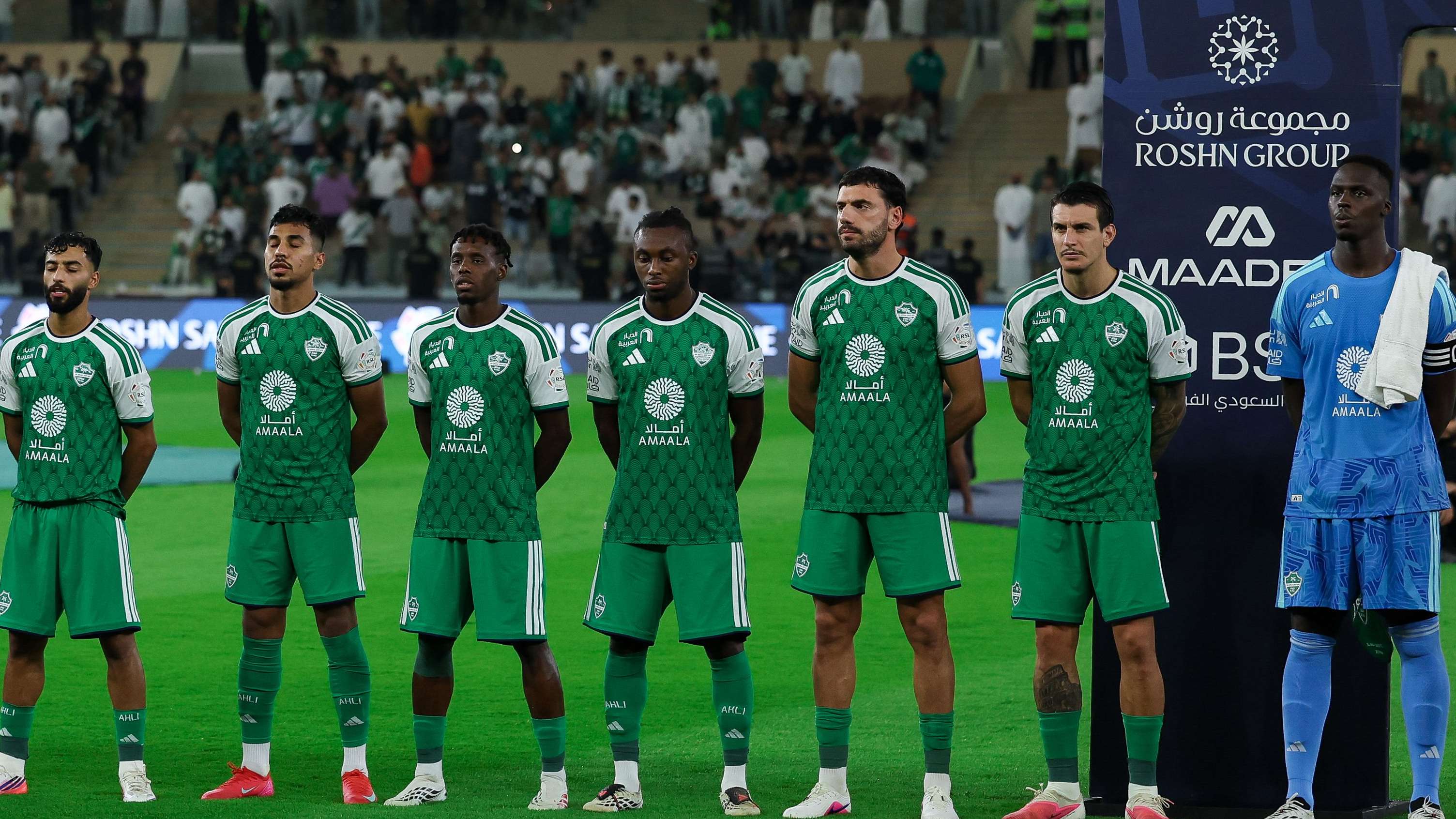

Saad Al-Kathiri Explains Why Al-Ahli’s Late Goal Against Al-Feiha Was Valid
Former international referee Saad Al-Kathiri has weighed in on the controversy surrounding Al-Ahli’s dramatic first-half goal against Al-Feiha, concluding that the referee was right to allow it. The goal, scored by Ukrainian midfielder Artem Bondarenko in the 47th minute, helped set up a 3-2 victory for Al-Ahli in a tense Saudi Roshn League encounter.
Al-Feiha’s players protested after the ball crossed the line, arguing that the first half should already have ended. The fourth official had indicated two minutes of stoppage time, and the goal arrived at 47:23—more than two minutes after the 45-minute mark. But according to Al-Kathiri, the displayed figure is not a fixed deadline for the referee to blow the whistle.
Why the Referee Was Entitled to Allow the Goal
Al-Kathiri, a refereeing analyst for Al-Jazirah newspaper, said the decision to let play continue was consistent with the Laws of the Game. The amount of stoppage time shown by the fourth official represents a minimum period to be added, rather than an exact limit that must be followed regardless of what happens on the pitch.
In practice, the referee may add further time if delays occur during the announced stoppage period. Substitutions, injuries, disciplinary incidents, goal celebrations, and other interruptions can all affect how much time is played. If additional time is lost, the referee can account for it before ending the half.
That distinction is central to understanding the Al-Ahli goal. The fact that it came after the two minutes indicated on the board did not, by itself, make it invalid. The referee retained authority to continue the match until satisfied that the required time had been played. Al-Kathiri therefore said Al-Feiha had no sound basis for objecting to the goal solely because of when it was scored.
Stoppage Time Is a Minimum, Not a Countdown
Stoppage time often creates confusion among supporters because the displayed number can look like a countdown to the final whistle. However, it is better understood as an estimate of the minimum additional time to be played. The referee remains responsible for managing the match and deciding when the half or game should end.
For example, if the board shows two added minutes but a player receives treatment during that period, the referee may allow play to continue beyond the 47-minute mark. The same principle applies if another stoppage occurs before the whistle. A goal scored during that additional time can still stand, provided the referee has not already ended the half.
This is why the exact moment of the whistle matters more than the number displayed by the fourth official. Once the referee blows to end a half, play is over. Before that whistle, the match remains active, and the referee may permit further action in line with the Laws of the Game.
Bondarenko’s Goal Changed the Feel of a Thrilling Match
The decision had a major impact on a closely fought contest. Bondarenko’s late first-half strike gave Al-Ahli a valuable lift, and the Ukrainian midfielder went on to score twice. Firas Al-Buraikan also found the net from the penalty spot as Al-Ahli secured a 3-2 win.
Al-Feiha continued to fight back and kept the pressure on, making the closing stages tense for Al-Ahli. The narrow margin meant every decision attracted extra attention, particularly the goal that arrived at the end of the first half. For the home side, Bondarenko’s strike was a crucial moment in a match where momentum could easily have shifted.
In football, a late goal can shape more than the scoreline. It can alter a team’s confidence, influence the tactical approach after the break, and put pressure on the opponent to respond. While the result ultimately depended on the full 90 minutes, the goal gave Al-Ahli an important platform in a match that finished 3-2.
What the Decision Means for Football Fans
Al-Kathiri’s assessment offers a useful reminder for fans following Saudi Pro League matches: the number shown for added time does not automatically determine when the referee must end play. The referee can extend that period to account for additional delays, and a goal scored before the final whistle may be valid even if the announced time has passed.
The incident also highlights why stoppage-time decisions can become a talking point in football. Supporters may focus on the clock, while referees must consider interruptions and the flow of play. Without access to the referee’s full timekeeping and match context, the displayed number alone may not explain why play continued.
For Al-Ahli, the ruling confirmed the value of a decisive goal in a hard-fought league fixture. For Al-Feiha, the protests reflected the frustration of conceding at a pivotal moment, but Al-Kathiri’s verdict supports the referee’s call. The key detail is straightforward: the two minutes were a minimum allowance, not an automatic signal that the half had ended.
As fans look ahead to the next round of Saudi Roshn League action, the debate may also shape predictions and discussion around the teams’ form. Al-Ahli will take confidence from a 3-2 victory and Bondarenko’s two-goal performance, while Al-Feiha will need to regroup after coming close in a match decided by fine margins. On the refereeing question, however, Al-Kathiri’s conclusion is clear: the late goal was valid because the referee had not yet blown the whistle to end the half.