
Schalke Players Taken to Hospital After Head Collision in Goalless Cologne Clash
A serious on-field collision overshadowed Cologne’s German second-division meeting with Schalke, after Schalke teammates Robin Gosens and Soufiane El-Fouzi suffered a heavy head-to-head impact during the first half. Both players were left bleeding and required urgent medical attention before being taken to hospital for further examinations. The match eventually finished 0-0, but concern for the injured pair became the defining story of the evening.
The incident occurred in the 37th minute, according to German broadcaster Sky. Cologne’s 20-year-old Said El Mala, a player of Lebanese heritage, rose to meet a long ball. The challenge and the ball’s movement brought El-Fouzi into contact with his own teammate, Gosens. The impact was severe, and both Schalke players immediately fell to the turf.
El Mala quickly recognised the seriousness of the situation and waved urgently for medical staff to come onto the pitch. Play was halted for several minutes while doctors from both clubs assessed the players and provided first aid. The stoppage transformed the atmosphere inside the stadium, with the focus shifting from the football to the condition of the injured men.
Medical Staff Respond as Match Is Stopped
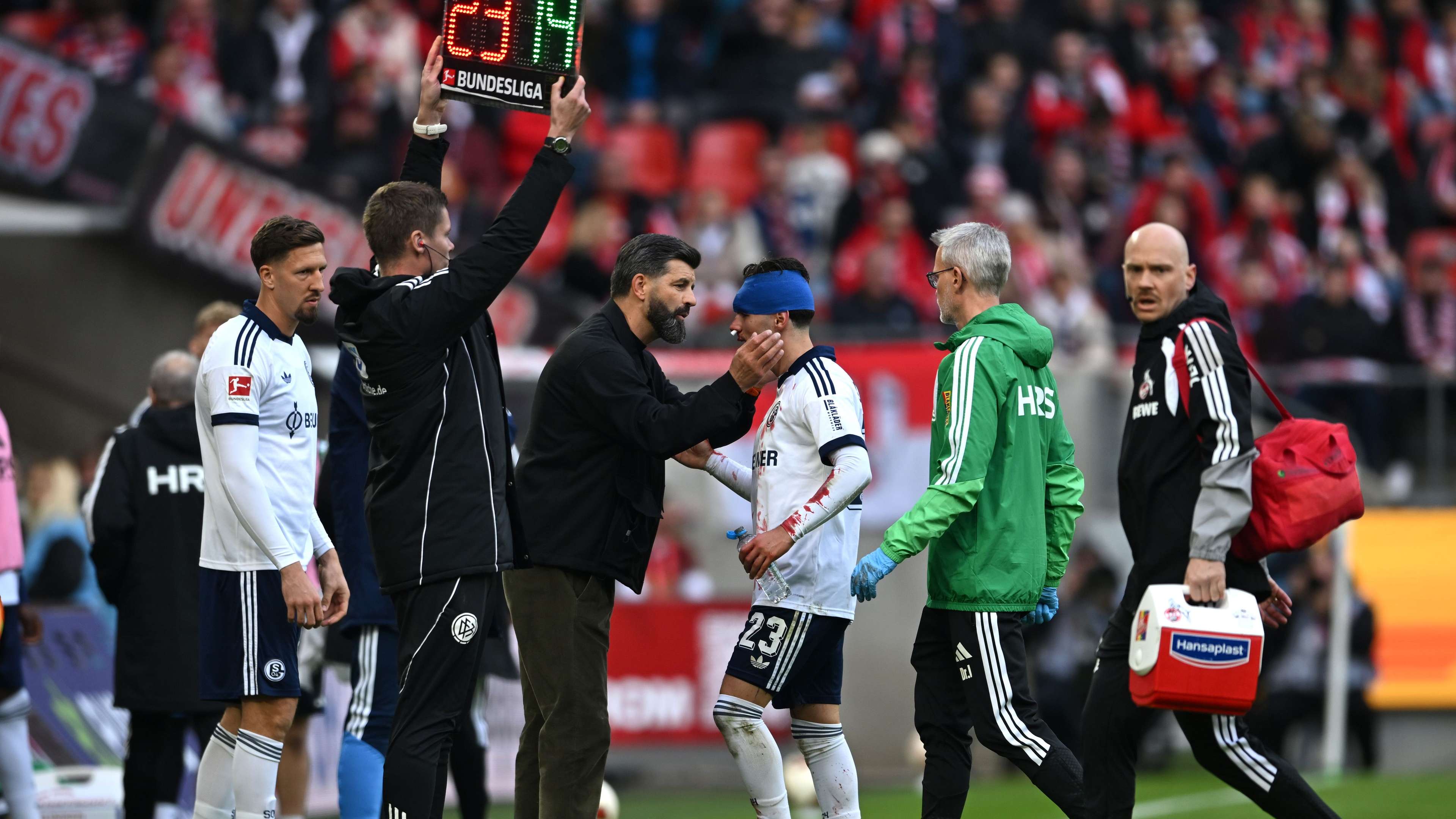
After receiving treatment on the field, El-Fouzi and Gosens were helped away from the immediate playing area so that examinations could continue. Gosens appeared unsteady, and medical personnel assisted him as he left the pitch. The visible signs of disorientation heightened concern among teammates, opponents and supporters watching the incident unfold.
Schalke were forced into two changes shortly before half-time. In the 43rd minute, Jannik Bachmann and Vitalie Becker came on for El-Fouzi and Gosens, respectively. The substitutions were made in response to the injuries rather than tactical considerations, leaving Schalke to reorganise during a difficult and emotionally charged spell in the game.
Sky reported that both players received additional care in the dressing room before being taken to hospital during the match. The move allowed medical professionals to carry out further checks away from the pitch. While the initial scene was alarming, a hospital assessment is an important precaution after a significant head impact, particularly when a player shows signs of imbalance.
Schalke Rally Around Injured Teammates
Schalke coach Miron Muslic later described the effect the collision had on his squad. Speaking to DAZN, he acknowledged that the incident had affected the team but said the players had drawn closer together afterwards. His comments reflected the emotional challenge of continuing a competitive match while teammates were receiving urgent treatment.
Such incidents can disrupt a side in several ways. Players may need time to regain concentration, and coaches must quickly adjust their formation after unexpected substitutions. At the same time, the experience can strengthen a team’s sense of responsibility and unity. Muslic’s assessment suggested Schalke were able to channel their concern into collective support as the game resumed.
For Cologne, the incident also brought a sudden pause to the match and a reminder of the risks involved in aerial challenges. El Mala had gone for the ball, but the collision occurred as players converged in a crowded area. In football, even routine contests for possession can become dangerous when several players move at speed and cannot see one another clearly.
A Goalless Result Takes a Back Seat
The match ended without a goal, with neither side able to turn its efforts into a breakthrough. Under normal circumstances, a 0-0 result might prompt discussion about missed chances, defensive organisation or the teams’ positions in the second-division campaign. On this occasion, however, the scoreline was secondary to the health of Gosens and El-Fouzi.
A goalless draw can still carry significance in a tightly contested league, where every point may influence a club’s momentum and ambitions. Yet the match’s most memorable moment was not a save, a near miss or a tactical decision. It was the lengthy stoppage and the urgent response from the medical teams, followed by Schalke’s need to make two changes before the break.
The incident also underlined the importance of football clubs’ medical preparations. Teams routinely have doctors and physiotherapists ready to respond, and match officials must allow enough time for players to be assessed safely. When a head injury is suspected, the priority is not the speed of the restart but the player’s immediate wellbeing and access to appropriate medical care.
What the Incident Means for the Teams
For Schalke, the immediate concern will be the results of the hospital examinations and the recovery timelines for both players. No further medical details were included in the initial reports, so any assessment of their availability for upcoming fixtures would be premature. The club will need to follow professional medical guidance before considering a return to training or competition.
Cologne, meanwhile, will also be hoping for positive news after a frightening moment involving players from both sides. El Mala’s quick call for assistance was an important response, and the prompt arrival of the medical teams ensured that the injured players could be treated without unnecessary delay.
Any football prediction for Schalke’s next match will depend partly on the condition of Gosens and El-Fouzi, as their absence could affect the team’s selection and balance. But until the club confirms more information, the responsible focus remains on recovery rather than speculation. The 0-0 result may shape the league table, yet the central takeaway from this Cologne–Schalke fixture is the seriousness of the collision and the importance of putting player safety first.