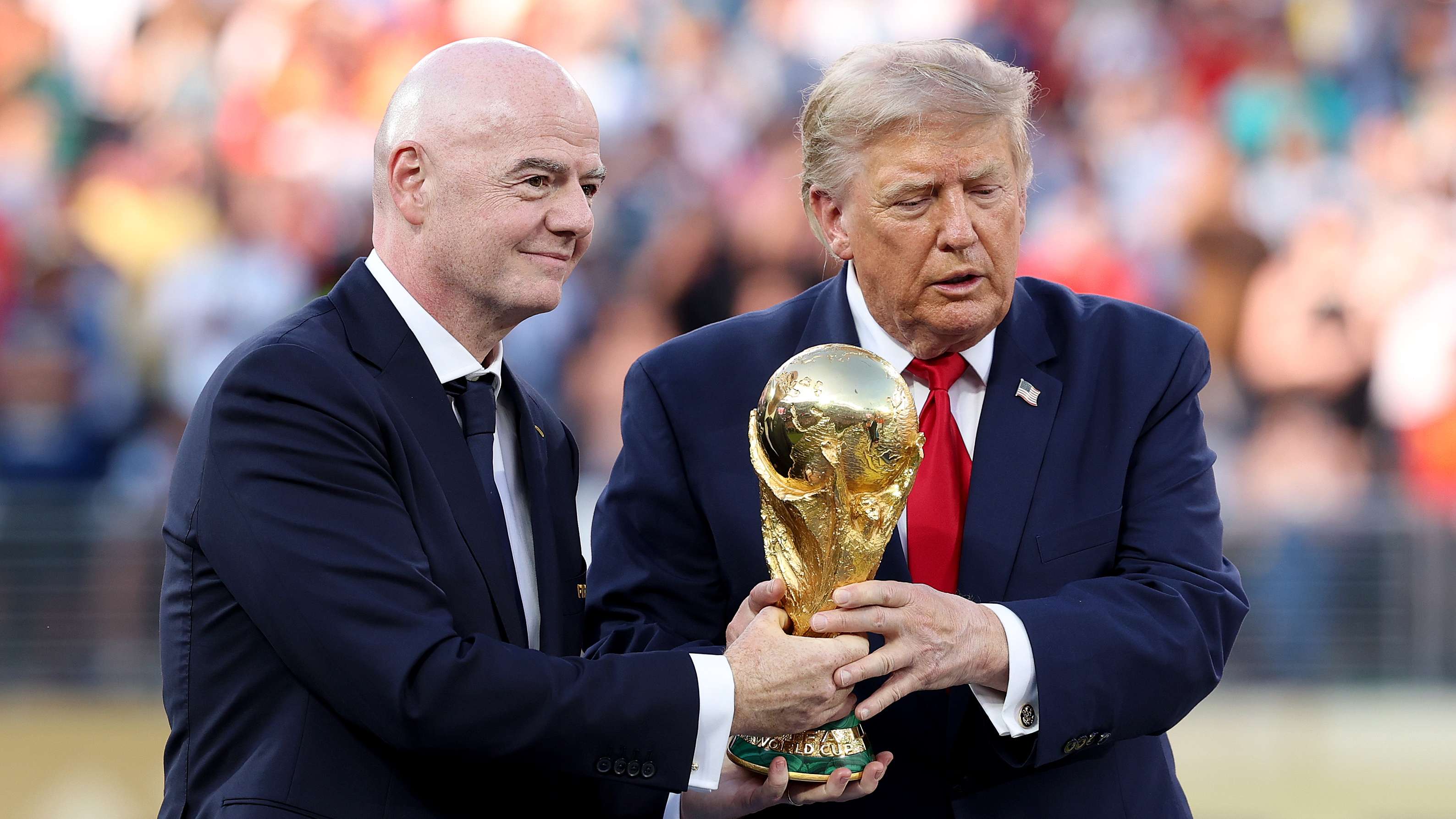

The FIFA president, Gianni Infantino, recently found himself at the center of controversy following a complaint filed by the human rights group “FairSquare” to the International Olympic Committee. The complaint alleged that Infantino had violated the Olympic Charter by failing to observe the rules of political neutrality.
The controversy stemmed from an incident during the World Cup, where American striker Folarin Balogun was shown a red card in a match against Bosnia and Herzegovina. As a result, Balogun was set to miss the round-of-16 clash against Belgium. However, US president Donald Trump intervened by contacting Infantino and requesting a reconsideration of the ban.
In a surprising move, FIFA decided to suspend Balogun’s one-match ban for 12 months, allowing the striker to participate in the subsequent match against the United States. This decision sparked outrage among critics, who accused Infantino of succumbing to political pressure and violating the principles of fair play.
The complaint against Infantino highlighted the conflict of interest in his role as both the FIFA president and a member of the International Olympic Committee. According to Article Two of the Olympic Charter, IOC members are prohibited from accepting instructions or mandates that could interfere with their independence.
Despite the serious allegations raised against Infantino, the International Olympic Committee announced that it would not investigate the FIFA president. The IOC clarified that the complaint fell outside the scope of its ethics commission, as it pertained to the governance and administrative decisions of an international federation.
The decision by the IOC not to pursue an investigation into Infantino has raised concerns among critics, who fear that it sets a dangerous precedent for the integrity of sports governance. The Norwegian Football Federation has even indicated that it may file an official complaint to FIFA’s ethics committee regarding the handling of Balogun’s suspension.
The controversy surrounding Infantino’s actions has once again brought the issue of political interference in sports to the forefront. As FIFA continues to grapple with allegations of corruption and misconduct, the importance of upholding the principles of fair play and transparency has never been more crucial.
In conclusion, the Olympic Committee’s decision not to investigate Gianni Infantino has left many questions unanswered. The implications of this ruling on the integrity of sports governance and the protection of athletes’ rights remain to be seen. As the football world awaits further developments, the spotlight will remain firmly on the FIFA president and his adherence to ethical standards in the world of sports.
Impact of Political Interference on Football Predictions
The recent controversy surrounding FIFA president Gianni Infantino and the political interference in football decisions has far-reaching implications that extend beyond the realm of governance. The incident involving American striker Folarin Balogun and the subsequent suspension of his ban have raised questions about the integrity of football predictions and the influence of external factors on the outcome of matches.
In the world of sports betting, football predictions play a significant role in guiding bettors on where to place their wagers. However, when political pressure influences the decisions of governing bodies like FIFA, it casts doubt on the fairness and transparency of the sport. This uncertainty can have a direct impact on the accuracy of football predictions, leading to unpredictable outcomes that may not align with the expected results.
Furthermore, the controversy surrounding Infantino’s actions has also shed light on the ethical considerations that must be taken into account when making football predictions. The integrity of the sport relies on fair play, impartial judgment, and adherence to established rules and regulations. When these principles are compromised by political interference, it undermines the credibility of football predictions and erodes the trust of fans, bettors, and stakeholders in the sport.
As the football world grapples with the fallout of this incident, it serves as a cautionary tale for those involved in football predictions. The unpredictability of external influences, such as political pressure, highlights the need for vigilance and critical analysis when making predictions. In an environment where integrity is paramount, football predictions must be based on sound judgment, thorough research, and a commitment to upholding the values of the sport.
Moving forward, stakeholders in the world of sports betting and football predictions must remain vigilant against the threat of political interference. By staying informed, maintaining ethical standards, and prioritizing transparency, the integrity of football predictions can be safeguarded from external pressures that seek to compromise the fairness and impartiality of the sport.
In conclusion, the controversy surrounding Gianni Infantino and the political interference in football decisions serves as a stark reminder of the challenges inherent in making accurate predictions in a landscape fraught with external influences. By recognizing the importance of upholding ethical standards, promoting transparency, and safeguarding the integrity of the sport, football predictions can continue to serve as a valuable tool for bettors while maintaining the credibility and fairness of the beautiful game.