
Al-Hilal Faces Defensive Crisis Amid Injuries in Saudi Roshn League Clash Against Al-Ahli
The recent showdown between Al-Hilal and their fierce rivals Al-Ahli in the Saudi Roshn League has turned into a tense and chaotic encounter, highlighting a significant challenge for the reigning champions — a series of injuries that decimated their defensive line. As the match unfolded at the iconic Kingdom Arena, it became evident that Al-Hilal’s squad was struggling to cope with the relentless onslaught of injuries, raising questions about their resilience and tactical depth ahead of the upcoming football prediction battles.
Injuries Strike Early and Often: A Defensive Nightmare for Al-Hilal
The clash, originally scheduled for the third round of the Saudi Roshn League, was postponed and rescheduled to Tuesday, giving both teams time to prepare. However, what initially promised to be a fiercely contested match quickly turned into a defensive nightmare for Al-Hilal. The trouble began in the early minutes when Saudi defender Ali Lajami sustained a hamstring injury, forcing him off the pitch. His departure necessitated an immediate substitution, with Hassan Tambakti entering the fray. Interestingly, Tambakti had only recently returned from a lengthy injury himself, underscoring the fragility of Al-Hilal’s defensive options.
This early injury set the tone for a match characterized by instability and unpredictability. The team’s second-choice defenders were thrown into the fire, with Tambakti stepping in to fill a crucial role. Meanwhile, the absence of Turkish defender Yusuf Akcicek, who was sidelined due to injury, compounded the problem, leaving coach Răzvan Lucescu to scramble for solutions.
Second-Half Chaos and a Heavy Blow to the Defense
The second half proved even more tumultuous for Al-Hilal. French full-back Theo Hernandez, a key player known for his attacking prowess and defensive solidity, was unable to complete the match. His exit from the game meant that Mutaib Al-Harbi had to be brought on as a replacement, further disrupting the team’s defensive coherence. As the match progressed, the injury toll mounted.
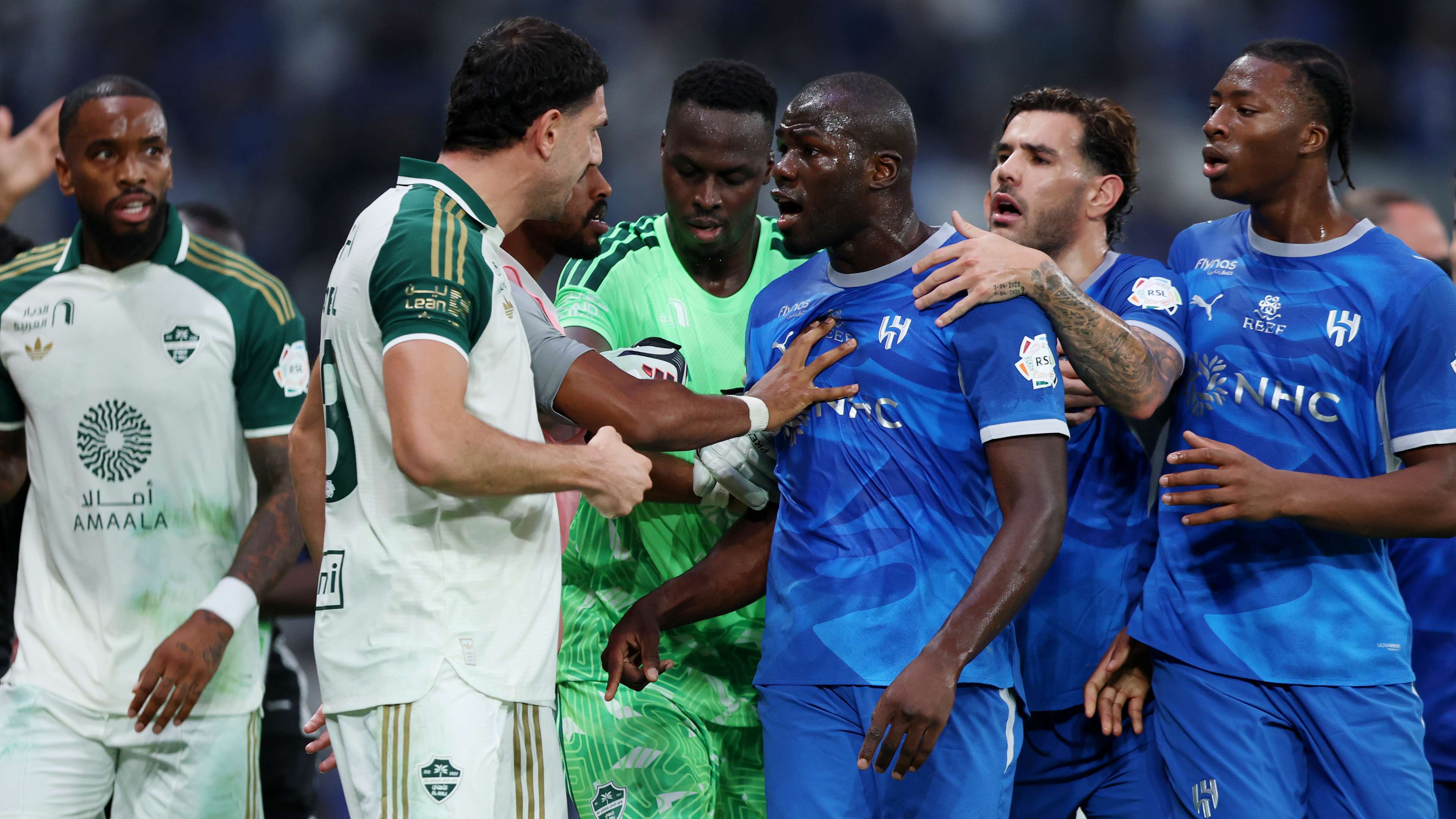
Perhaps the most alarming incident involved Senegalese defender Kalidou Koulibaly. During a fierce collision with Al-Ahli’s French midfielder Valentin Atangana, Koulibaly sustained a heavy blow to the head and was bleeding heavily. The severity of the injury was such that he required urgent bandaging around his head. Despite the injury, Italian coach Simone Inzaghi opted to keep Koulibaly on the pitch, displaying a commendable level of determination but also risking further harm and compromising the team’s defensive stability.
Complete Defensive Breakdown: An Unfortunate Record
By the end of the match, only right-back Mohammed Mahzari remained unscathed among Al-Hilal’s defenders. The rest of the backline had succumbed to injuries or tactical substitutions, leaving the team severely undermanned in a critical phase of the competition. This widespread injury crisis raises serious concerns about Al-Hilal’s ability to maintain their dominance in the Saudi Pro League and their prospects in upcoming matches, especially when considering football prediction models that factor in team stability and squad depth.
The Broader Context: Injury Concerns and Their Impact on Football Predictions
In the world of football prediction, team fitness and injury status are crucial variables. Al-Hilal’s recent experience underscores the importance of squad depth and injury management in shaping match outcomes. When key players are sidelined, especially in a high-stakes rivalry like the Clasico against Al-Ahli, the team’s performance can significantly deteriorate, impacting betting odds, fan expectations, and tactical approaches.
This incident also highlights a broader trend in modern football: the physical toll of congested schedules, intense fixtures, and the high physical demands placed on players. As teams push their limits, injuries become an inevitable part of the game, influencing predictions and strategies alike. For football enthusiasts and analysts, understanding these injury dynamics is vital for making accurate predictions and assessing team prospects in upcoming fixtures.
Looking Ahead: How Will Al-Hilal Recover?
Al-Hilal’s injury crisis in this pivotal clash serves as a wake-up call for the team’s management and coaching staff. To regain their competitive edge, the club must prioritize injury prevention, effective squad rotation, and tactical flexibility. The club’s medical team will also need to evaluate player fitness levels meticulously and implement comprehensive recovery protocols.
From a football prediction standpoint, fans and analysts will be watching closely how Al-Hilal adapts to these setbacks in their upcoming fixtures. Will they be able to field a more resilient lineup, or will this injury wave hamper their title ambitions? The team’s ability to bounce back will be a key factor in upcoming predictions and betting considerations.
The Significance of Player Fitness and Squad Depth in Modern Football
Al-Hilal’s recent struggles serve as a case study in the importance of maintaining robust squad depth and managing player fitness. Successful teams often have versatile players capable of filling multiple roles, which can be a decisive advantage when injuries strike. Furthermore, proactive injury management and recovery strategies are increasingly vital in ensuring team stability throughout the demanding football season.
For fans eager to make football predictions for future matches, keeping an eye on injury reports, squad rotations, and team fitness levels will be crucial. Teams that are better prepared physically tend to perform more consistently, making injury management a key element in accurate forecasting.
Conclusion: A Challenging Road Ahead for Al-Hilal
The recent match between Al-Hilal and Al-Ahli has highlighted a critical vulnerability for the reigning Saudi Pro League champions — their defense, compromised by a string of injuries, struggled to withstand the pressure from their rivals. As the team looks to recover and regroup, the incident underscores the broader importance of squad resilience, tactical adaptability, and injury prevention in modern football.
For football prediction enthusiasts, this development serves as a reminder that injury status and team stability are essential factors in forecasting match outcomes. Moving forward, Al-Hilal’s ability to address their injury crisis will significantly influence their prospects for success in the league and their continental ambitions.
As fans and analysts await the next fixtures, the focus will be on how well Al-Hilal’s squad can adapt to adversity and whether their injury-hit defense can regain strength in time for the crucial matches ahead. The evolving story of this football season continues to remind us that resilience, depth, and strategic management are key ingredients for triumph on the pitch.